

First English Parliament Meets at Westminster in 1265
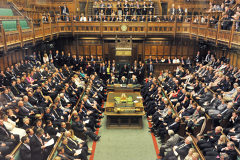
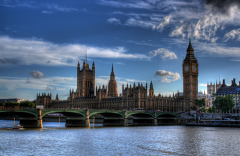
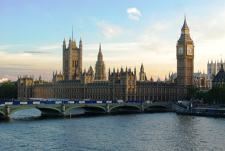
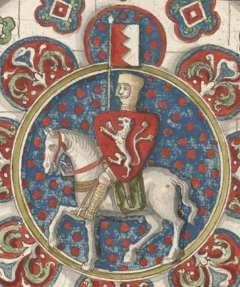
Simon de Montfort, Earl of Leicester, summoned representatives to the Palace of Westminster on January 20, 1265, creating an assembly that for the first time in English history included not just nobles and clergy but elected commoners from the towns and shires. De Montfort was a rebel who had overthrown King Henry III in battle, and his parliament was designed to legitimize his rule. The institution he created for self-serving reasons would outlast him, his cause, and the medieval world itself. England had possessed a Great Council for centuries, a body of powerful barons and bishops who advised the king and consented to taxation. Henry III's frequent demands for money to fund foreign wars and papal favorites had driven the barons to rebellion. De Montfort, though French-born, emerged as the leader of the baronial opposition and defeated Henry's forces at the Battle of Lewes in May 1264, capturing both the king and his son, the future Edward I. De Montfort needed political legitimacy. He summoned a parliament that included the traditional magnates but added a radical innovation: two knights from each shire and two burgesses from each town. The commoners were not invited to share power equally with the barons; they were there to broaden de Montfort's base of support and to approve the taxes he needed to govern. But the precedent of including representatives chosen by ordinary freeholders fundamentally altered the concept of who had a voice in English governance. The parliament met for several weeks and transacted significant business, including the release of certain political prisoners and the arrangement of a truce with the Welsh. De Montfort governed England as a virtual dictator for fifteen months, using the parliament as his instrument of authority. His rule ended violently. Prince Edward escaped captivity and rallied royalist forces. At the Battle of Evesham on August 4, 1265, Edward's army surrounded and destroyed de Montfort's forces. De Montfort was killed, and his body was mutilated on the field. Edward I, who restored his father's authority, recognized the value of what de Montfort had created. When Edward became king in 1272, he adopted the practice of summoning commoners to parliament, and his "Model Parliament" of 1295 established the template that evolved over the following centuries into the House of Commons. De Montfort's parliament was born of rebellion and personal ambition, but the principle that ordinary subjects deserved representation in government survived its creator by eight hundred years.
January 20, 1265
761 years ago
Key Figures & Places
What Else Happened on January 20
Pope Fabian died under the sword during Emperor Decius’s systematic purge of Christians, becoming one of the first high-profile casualties of the Roman state’s …
Emperor Decius launched a systematic persecution of Christians across the Roman Empire beginning on January 20, 250, requiring every citizen to perform a sacrif…
King Chindasuinth crowned his son Recceswinth as co-ruler of the Visigothic Kingdom at the urging of Bishop Braulio of Zaragoza, securing a smooth dynastic succ…
Lalli, a Finnish peasant, struck down Bishop Henry on the frozen surface of Lake Köyliö after a dispute over food and hospitality. This act of violence transfor…
Simon de Montfort convened the first English parliament to include representatives from major towns alongside the traditional nobility at the Palace of Westmins…
Wladyslaw the Elbow-high secured his coronation at Wawel Cathedral, finally reuniting a fractured Poland under a single crown after nearly two centuries of frag…
Talk to History
Have a conversation with historical figures who witnessed this era. Ask questions, explore perspectives, and bring history to life.