Roanoke Colony Returns: Settlers Who Will Vanish
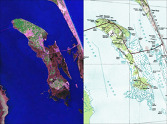
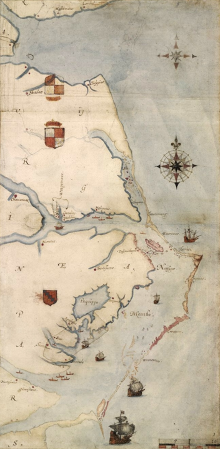
Every colonist had vanished. When Governor John White finally returned to Roanoke Island after three years of delays, he found the settlement abandoned, the houses dismantled, and a single word carved into a wooden post: CROATOAN. No bodies, no signs of violence, no graves. More than a hundred English men, women, and children had disappeared into the Carolina wilderness without explanation. White had sailed back to England in August 1587 to resupply the colony, leaving behind 115 settlers including his own daughter, Eleanor Dare, and his infant granddaughter Virginia, the first English child born in the Americas. He expected to return within months, but the Spanish Armada crisis of 1588 commandeered every available English ship, and Queen Elizabeth prohibited any vessel from leaving port. By the time White secured passage back to Roanoke in August 1590, three full years had passed. The word CROATOAN referred to an island about fifty miles south, home to a group of friendly Natives with whom the colonists had maintained good relations. White had instructed the settlers to carve a Maltese cross if they left under duress, and no cross appeared on any tree or post. He desperately wanted to sail south to Croatoan Island, but a hurricane struck the Outer Banks, damaging his ships and forcing the fleet to abandon the search. Theories about the colony's fate have multiplied for four centuries. Archaeological evidence from the Croatoan site, now Hatteras Island, includes European artifacts mixed with Native materials, suggesting at least some colonists integrated into local tribes. Other researchers point to evidence of settlements farther inland along the Chowan River. The Lumbee people of North Carolina have long claimed descent from the colonists. Roanoke remains the oldest unsolved missing-persons case in American history, and every proposed answer creates new questions.
July 22, 1587
439 years ago
Key Figures & Places
What Else Happened on July 22
The Abbasid army crushed Emperor Theophilos’s forces at the Battle of Anzen, nearly capturing the Byzantine ruler himself. This defeat shattered the myth of Byz…
The elected king refused to wear a crown of gold where Christ wore thorns. Godfrey of Bouillon took Jerusalem on July 15, 1099, after a siege that left the stre…
Crusaders slaughtered nearly the entire population of Béziers, including thousands of Catholics, during the opening act of the Albigensian Crusade. By refusing …
A coalition of German princes and towns shattered King Valdemar II’s Baltic empire at the Battle of Bornhöved, ending Danish dominance in Northern Europe. This …
English longbows tore through Scottish schiltrons at Falkirk, shattering William Wallace's most effective tactical formation and ending his brief career as a mi…
The Danube rose twenty feet in a single day. July 1342. Rivers across central Europe tore away entire villages, drowned livestock by the thousands, and turned f…
Talk to History
Have a conversation with historical figures who witnessed this era. Ask questions, explore perspectives, and bring history to life.