

Spain Splits: Civil War Erupts, Franco's Rise Begins
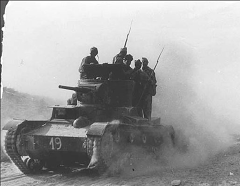
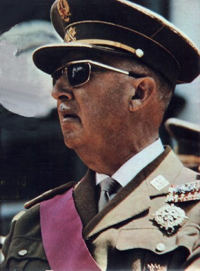
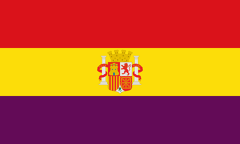
A military uprising against Spain's elected government on July 18, 1936, plunged the country into a three-year civil war that killed half a million people, served as a rehearsal for World War II, and installed a dictator who ruled until 1975. The rebellion, led by a group of generals including Francisco Franco, Emilio Mola, and José Sanjurjo, began in Spanish Morocco on July 17 and spread to garrison towns across Spain the following day. The coup was supposed to succeed in days. Instead, it triggered the bloodiest conflict in Spanish history. Spain in 1936 was a fractured society. The Second Republic, established in 1931, had attempted sweeping reforms: land redistribution, separation of church and state, regional autonomy for Catalonia and the Basque Country, and expansion of education and labor rights. Conservatives, the Catholic Church, the army, and large landowners viewed these reforms as revolutionary assaults on Spanish tradition. The left was equally divided between moderate socialists, anarchists, communists, and Trotskyists who fought each other almost as fiercely as they fought the right. The initial coup failed to take Madrid, Barcelona, Valencia, and most of industrial Spain, where workers' militias and loyal security forces suppressed the rebellions. The country split roughly in half, with the Nationalists controlling the rural west and south and the Republic holding the urban east and north. Both sides immediately sought foreign support. Hitler and Mussolini sent troops, tanks, aircraft, and advisors to Franco. Stalin provided weapons and political commissars to the Republic. Britain and France adopted a policy of non-intervention that effectively starved the Republic of arms while Germany and Italy ignored the embargo. The war became a laboratory for the tactics and technologies of the coming world war. The Luftwaffe's Condor Legion tested dive-bombing and close air support at Guernica, destroying the Basque town in April 1937 and inspiring Picasso's most famous painting. Soviet T-26 tanks clashed with German Panzer Is in the first armored engagements between the rival powers. Roughly 35,000 volunteers from over fifty countries fought in the International Brigades on the Republican side. Franco's Nationalists won in April 1939, and his dictatorship lasted until his death in 1975, making Spain the longest-surviving fascist-aligned regime in Europe.
July 18, 1936
90 years ago
Key Figures & Places

What Else Happened on July 18
The Etruscan city of Veii lured the Fabian clan into a lethal trap at the Cremera River, annihilating the entire Roman force. This disaster nearly wiped out one…
The Gauls covered fifteen miles in a single day after their victory—no stopping, no camp, straight to an undefended Rome. At the Allia River, Roman commanders p…
Raiding Gauls crushed a Roman army at the Allia River, scattering the defenders and leaving Rome completely unprotected for the first time in the republic's his…

Fire erupted in the shops clustered around the Circus Maximus on July 18, 64 AD, and for six days the flames consumed the densest neighborhoods of the ancient w…
Sixty thousand men crammed into Antioch for nine months while Julian planned his Persian invasion. The city couldn't handle it. Food prices tripled. Brothels ov…
Attila the Hun besieged and razed Aquileia to the ground, wiping out one of the wealthiest cities in the Western Roman Empire after weeks of relentless assault.…
Talk to History
Have a conversation with historical figures who witnessed this era. Ask questions, explore perspectives, and bring history to life.