

Luna 1 Flies Past the Moon: USSR Misses by 6000 km, Still Makes History
Luna 1 missed the Moon by 3,725 miles. That was the plan — sort of. The Soviets had aimed for an impact, but a timing error during the upper-stage burn sent the probe sailing past. Didn't matter. On January 2, 1959, it became the first human-made object to escape Earth's gravity and reach the vicinity of another world. The spacecraft carried no cameras. It did carry instruments that discovered the solar wind — a stream of charged particles flowing from the Sun that nobody had directly measured before. Luna 1 also confirmed the Moon had no magnetic field worth mentioning. After passing the Moon, the probe kept going. It settled into orbit around the Sun, somewhere between Earth and Mars. It's still out there. The Soviets called it Mechta — "Dream." The Americans, watching from behind, called it a wake-up call.
January 2, 1959
67 years ago
Key Figures & Places

Luna 1
Wikipedia
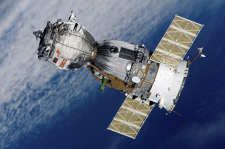
spacecraft
Wikipedia

U.S.S.R.
Wikipedia

Soviet Union
Wikipedia
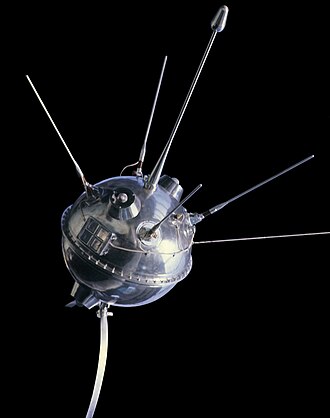
Luna 1
Wikipedia

Moon
Wikipedia

Sun
Wikipedia

Soviet Union
Wikipedia

Crimea
Wikipedia

Poland
Wikipedia

Józef Piłsudski
Wikipedia

International Red Cross and Red Crescent Movement
Wikipedia

Louis Daguerre
Wikipedia

Sonda espacial
Wikipedia
What Else Happened on January 2
según una tradición cristiana la Virgen vino en carne mortal a Caesaraugusta (Zaragoza) a ver a Santiago cuando aún vivía en Jerusalén.
On January 2 of the Year of the Four Emperors, the Roman legions stationed in Germania Superior refused to swear their annual oath of loyalty to Emperor Galba. …
The Rhine froze solid in the winter of 366 AD. The Alemanni walked across. Thousands of Germanic warriors poured into Roman Gaul on a highway of ice, looting to…
Mercurius became Pope John II on January 2, 533, and set a precedent that has lasted nearly 1,500 years. He was the first pope to change his name upon election.…
Im Frieden von Perónne einigen sich der französische König Philipp II. und Graf Balduin IX. von Flandern über streitige Besitzansprüche im Artois.
Christian forces defeated an Ottoman Turkish army at the Battle of Kunovica in 1444, near modern-day Serbia. The victory was part of the larger Crusade of Varna…
Talk to History
Have a conversation with historical figures who witnessed this era. Ask questions, explore perspectives, and bring history to life.