

Taft Becomes Chief Justice: Only Man to Hold Both Offices
Only one person in American history has led both the executive and judicial branches of the federal government, and he always preferred the bench. William Howard Taft was sworn in as Chief Justice of the United States on July 11, 1921, a decade after leaving the White House, fulfilling what he called the ambition of his lifetime. Taft had confided to friends for years that the presidency was never the job he wanted. Taft's path to the Supreme Court ran through a presidency he never sought with much enthusiasm. Theodore Roosevelt handpicked him as a successor in 1908, and Taft won easily, but his cautious judicial temperament clashed with the progressive activism Roosevelt expected. The two men's bitter falling out split the Republican Party in 1912, handing Woodrow Wilson the presidency. Taft left office humiliated, having won only eight electoral votes. The intervening years treated Taft well. He taught law at Yale, served as president of the American Bar Association, and co-chaired the National War Labor Board during World War I. When Chief Justice Edward Douglass White died in May 1921, President Warren Harding moved quickly. Taft's nomination sailed through the Senate on the same day it was submitted, a courtesy extended to the only former president ever nominated for the court. As Chief Justice for nine years, Taft proved more consequential than he had been as president. He lobbied Congress to pass the Judiciary Act of 1925, which gave the Supreme Court discretionary control over its docket through the certiorari process. He also championed the construction of a dedicated Supreme Court building, though he died in 1930 before its completion. The man who never wanted to be president found his true calling in the third branch.
July 11, 1921
105 years ago
Key Figures & Places
President of the United States
Wikipedia
Supreme Court of the United States
Wikipedia
Chief Justice of the United States
Wikipedia
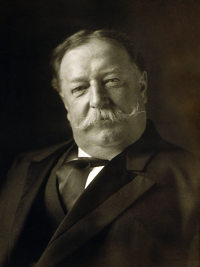
William Howard Taft
Wikipedia
President
Wikipedia

William Howard Taft
Wikipedia

Chief Justice of the United States
Wikipedia
Supreme Court of the United States
Wikipedia

John Quincy Adams
Wikipedia
1848
Wikipedia

United States
Wikipedia
What Else Happened on July 11
Western Roman Emperor Anthemius met his end at the hands of his own generals after they cornered him inside St. Peter’s Basilica. His execution shattered the la…
Byzantine Emperor Michael I abdicated on July 11, 813, handing the throne to General Leo the Armenian before retreating into monastic life under the name Athana…
Charles the Simple granted the lower Seine valley to the Viking leader Rollo, ending decades of Norse raids in exchange for a defensive buffer against future in…
The retired emperor barricaded himself inside his own palace with just 200 warriors while his brother commanded 500 outside the gates. Sutoku had abdicated four…

A boy king diagnosed with leprosy at age nine held the most embattled throne in Christendom and became one of the medieval world's most extraordinary military l…

French knights rode into Flanders expecting to crush a peasant rebellion and instead suffered one of medieval Europe's most humiliating military defeats. The Ba…
Talk to History
Have a conversation with historical figures who witnessed this era. Ask questions, explore perspectives, and bring history to life.