

Babe Ruth Debuts: Baseball's Greatest Legend Arrives
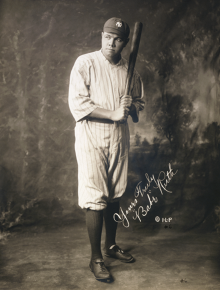
A nineteen-year-old left-hander from a Baltimore reform school walked onto the mound at Fenway Park and started a career that would reshape American professional sports. George Herman "Babe" Ruth Jr. made his major league debut for the Boston Red Sox on July 11, 1914, pitching seven innings against the Cleveland Naps and earning the win in a 4-3 victory. Few in the sparse weekday crowd could have guessed they were watching the future of baseball. Ruth had spent most of his childhood at St. Mary's Industrial School for Boys, a Catholic institution for orphans and delinquents where Brother Matthias Boutlier taught him to hit and pitch. Jack Dunn, owner of the minor league Baltimore Orioles, signed Ruth just five months before his big league debut, and the teenager's teammates started calling him "Jack's newest babe." The nickname stuck permanently. Boston manager Bill Carrigan sent Ruth back to the minors briefly that first season, but by 1915 he was a fixture in the rotation. Ruth won 89 games as a pitcher over his first six seasons, including a record 29.2 consecutive scoreless innings in World Series play. His pitching alone would have made him a Hall of Famer. But the Red Sox began using him as an outfielder to keep his bat in the lineup every day, and the experiment produced the most dominant offensive force the game had ever seen. The sale to the New York Yankees after the 1919 season for $100,000 transformed both franchises. Ruth's home run explosion in the 1920s drew millions of new fans to ballparks, rescued baseball from the Black Sox scandal, and established the power game that defines the sport today. The kid from the reform school became the most famous athlete on earth.
July 11, 1914
112 years ago
Key Figures & Places



What Else Happened on July 11
Western Roman Emperor Anthemius met his end at the hands of his own generals after they cornered him inside St. Peter’s Basilica. His execution shattered the la…
Byzantine Emperor Michael I abdicated on July 11, 813, handing the throne to General Leo the Armenian before retreating into monastic life under the name Athana…
Charles the Simple granted the lower Seine valley to the Viking leader Rollo, ending decades of Norse raids in exchange for a defensive buffer against future in…
The retired emperor barricaded himself inside his own palace with just 200 warriors while his brother commanded 500 outside the gates. Sutoku had abdicated four…

A boy king diagnosed with leprosy at age nine held the most embattled throne in Christendom and became one of the medieval world's most extraordinary military l…

French knights rode into Flanders expecting to crush a peasant rebellion and instead suffered one of medieval Europe's most humiliating military defeats. The Ba…
Talk to History
Have a conversation with historical figures who witnessed this era. Ask questions, explore perspectives, and bring history to life.