Hawaii Annexed: McKinley Signs Newlands Resolution
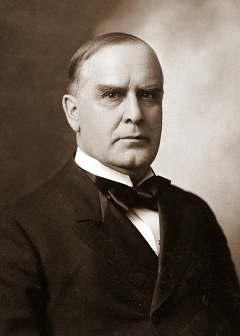
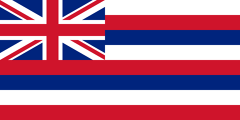
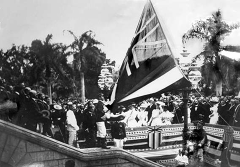
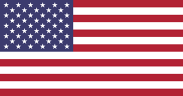
President William McKinley signed the Newlands Resolution on July 7, 1898, formally annexing Hawaii as a United States territory. The resolution bypassed the treaty process — which required a two-thirds Senate vote that annexation supporters could not muster — by using a joint resolution of Congress that needed only simple majorities. The legal maneuver was constitutionally dubious, but the Spanish-American War had made Hawaii s strategic value as a Pacific naval station impossible for expansionists to ignore. The annexation was the culmination of five years of American machinations in Hawaii. In January 1893, a group of American and European businessmen had overthrown Queen Liliuokalani with the support of 162 U.S. Marines from the USS Boston, who came ashore to "protect American lives and property." The revolutionaries established a provisional government and immediately petitioned Washington for annexation. President Grover Cleveland investigated, concluded the overthrow was illegal, and refused to annex. The Republic of Hawaii operated as an independent but American-dominated state until McKinley took office. Native Hawaiians organized massive opposition to annexation. The Hui Aloha Aina and Hui Kalaiaina organizations collected petitions with over 21,000 signatures opposing the resolution — representing more than half the Native Hawaiian population. Four delegates traveled to Washington to present the petitions to Congress. The signatures were filed and ignored. The strategic argument for annexation crystallized during the Spanish-American War in 1898. American naval vessels needed coaling stations and supply bases across the Pacific to support operations in the Philippines. Pearl Harbor, which the United States had already secured exclusive use of through the 1887 Bayonet Constitution, was the obvious choice. Military necessity gave political cover to what had been a controversial proposition. Hawaii remained a territory for sixty-one years before achieving statehood in 1959. In 1993, Congress passed a formal apology resolution acknowledging that the overthrow of the Hawaiian monarchy was illegal and that Native Hawaiians had never directly relinquished their sovereignty. The apology carried no legal remedy or reparations.
July 7, 1898
128 years ago
Key Figures & Places
What Else Happened on July 7
Nineteen weeks. That's how long Tyre held out against the Venetian fleet and Jerusalem's Crusader army in 1124. The Doge himself, Domenico Michiel, commanded 12…
The siege lasted five months, but it was the Venetian fleet's 120 ships that decided Tyre's fate. Doge Domenico Michiel didn't just want victory—he demanded a t…
Pope Callixtus III ordered a formal retrial of Joan of Arc s case in 1456, and on July 7 the ecclesiastical court declared her innocent of all charges, annullin…
Hernán Cortés commanded maybe 440 Spanish soldiers and a few thousand Tlaxcalan allies. Against them: somewhere between 20,000 and 40,000 Aztec warriors on an o…
Jacques Cartier's crew offered knives and iron goods to the Mi'kmaq on July 7, 1534. The Mi'kmaq responded by lifting furs on sticks, signaling trade. Within ho…
Jacques Cartier traded furs for European goods with the Mi'kmaq people in the Chaleur Bay, initiating the first formal contact between France and the Indigenous…
Talk to History
Have a conversation with historical figures who witnessed this era. Ask questions, explore perspectives, and bring history to life.