Joan of Arc Vindicated: Martyr Cleared 25 Years On
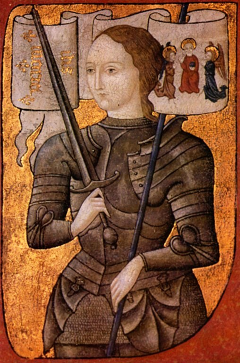
Pope Callixtus III ordered a formal retrial of Joan of Arc s case in 1456, and on July 7 the ecclesiastical court declared her innocent of all charges, annulling the 1431 conviction for heresy that had sent her to the stake at age nineteen. The verdict came twenty-five years too late to save her life, but it served the political interests of the French crown, which could not comfortably owe its legitimacy to a convicted heretic. Joan had appeared at the court of the Dauphin Charles in 1429, a seventeen-year-old peasant girl from Domremy who claimed that the voices of Saints Michael, Catherine, and Margaret had commanded her to drive the English from France and see Charles crowned king. Against all military logic, she was given armor, a horse, and command authority at the siege of Orleans. The besieged city was relieved within nine days of her arrival. Charles was crowned at Reims Cathedral on July 17, 1429, with Joan standing beside him. Her capture by Burgundian forces at Compiegne in May 1430 led to a trial orchestrated by Pierre Cauchon, the Bishop of Beauvais, who was politically allied with the English occupation. The trial was a judicial farce designed to produce a conviction. Joan was denied legal counsel, interrogated repeatedly by teams of theologians, and tricked into statements that could be construed as heretical. The charges centered on her wearing men s clothing and her claim to receive direct divine revelation, both threatening to ecclesiastical authority. Joan was burned at the stake in the marketplace of Rouen on May 30, 1431. She was tied to a tall pillar so the crowd could watch. The executioner later said he was terrified of being damned for burning a saint. English soldiers reportedly saw the word "Jesus" formed in the flames. The retrial of 1456 heard testimony from 115 witnesses, including childhood friends, soldiers who had fought alongside her, and clerics who had participated in the original proceedings. Many testified to the original trial s procedural violations and Cauchon s bias. The Catholic Church canonized Joan as a saint in 1920, and she remains one of France s most enduring national symbols.
July 7, 1456
570 years ago
Key Figures & Places
What Else Happened on July 7
Nineteen weeks. That's how long Tyre held out against the Venetian fleet and Jerusalem's Crusader army in 1124. The Doge himself, Domenico Michiel, commanded 12…
The siege lasted five months, but it was the Venetian fleet's 120 ships that decided Tyre's fate. Doge Domenico Michiel didn't just want victory—he demanded a t…
Hernán Cortés commanded maybe 440 Spanish soldiers and a few thousand Tlaxcalan allies. Against them: somewhere between 20,000 and 40,000 Aztec warriors on an o…
Jacques Cartier's crew offered knives and iron goods to the Mi'kmaq on July 7, 1534. The Mi'kmaq responded by lifting furs on sticks, signaling trade. Within ho…
Jacques Cartier traded furs for European goods with the Mi'kmaq people in the Chaleur Bay, initiating the first formal contact between France and the Indigenous…
The garrison numbered just forty-seven men when 3,000 French soldiers crossed into Luxembourg on April 1, 1543. Governor Claude de Bouillon surrendered within h…
Talk to History
Have a conversation with historical figures who witnessed this era. Ask questions, explore perspectives, and bring history to life.