Nixon Halts Vietnam War: Offensive Action Suspended
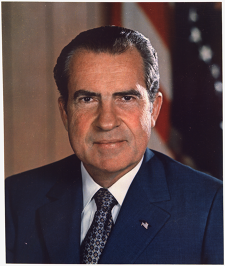
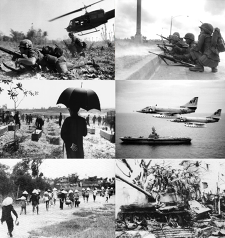
President Richard Nixon announced on January 15, 1973, that he was suspending all offensive military operations against North Vietnam, citing progress in the Paris peace talks that had dragged on for nearly five years. The announcement came twelve days after the most intense aerial bombardment campaign of the entire war, a sequence of events that revealed the brutal calculus behind Nixon's pursuit of "peace with honor." The Paris peace negotiations, led by Henry Kissinger and North Vietnam's Le Duc Tho, had stalled in December 1972 when South Vietnamese President Nguyen Van Thieu refused to accept the draft agreement. Nixon responded by ordering Operation Linebacker II, an eleven-day bombing campaign that dropped more than 20,000 tons of ordnance on Hanoi and Haiphong. B-52 bombers flew over 700 sorties, and the North Vietnamese fired nearly all their surface-to-air missile reserves. Fifteen B-52s were shot down and thirty-three airmen killed. The bombing drew worldwide condemnation, with the Swedish prime minister comparing it to Nazi atrocities. Whether the bombing campaign actually moved the negotiations forward remains one of the war's most contested questions. Kissinger and North Vietnamese negotiators returned to Paris in early January and quickly reached terms that were nearly identical to the October 1972 draft that had triggered the breakdown. Critics argued that Nixon had killed hundreds of people and destroyed significant North Vietnamese infrastructure to achieve an agreement that was already on the table. The Paris Peace Accords were signed on January 27, 1973, twelve days after Nixon's suspension announcement. The agreement called for a ceasefire, the withdrawal of remaining American forces, and the return of prisoners of war. Crucially, it allowed North Vietnamese troops to remain in positions they already held in South Vietnam. The accords held for barely two years. North Vietnam launched a full-scale invasion in early 1975, and Saigon fell on April 30. The peace that Nixon had bombed and negotiated to achieve proved to be nothing more than a decent interval between American withdrawal and South Vietnamese defeat.
January 15, 1973
53 years ago
Key Figures & Places
What Else Happened on January 15
Nebuchadnezzar II of Babylon laid siege to Jerusalem on January 15, 588 BC, beginning a thirty-month blockade that would end with the city's destruction, the bu…
Otho seized the Roman imperial throne on January 15, 69 AD, by orchestrating the murder of Emperor Galba in the Roman Forum and securing the allegiance of the P…
A king who couldn't get divorced. So he invented his own church. Henry VIII simply rewrote the religious rulebook to annul his marriage to Catherine of Aragon, …
A royal charter scrawled on parchment, and suddenly Canada becomes a divine real estate project. Francis I handed Roberval 50,000 square miles of frozen wildern…
Elizabeth Tudor walked into Westminster Abbey on January 15, 1559, under a canopy of state, wearing crimson velvet robes over a cloth-of-gold dress, and emerged…
The Livonian War ended not with a bang, but with a map redrawn in Polish ink. Russia's Ivan the Terrible — who'd spent decades battling for these Baltic territo…
Talk to History
Have a conversation with historical figures who witnessed this era. Ask questions, explore perspectives, and bring history to life.