

Governor Wallace Blocks the Schoolhouse Door: Segregation's Last Stand
Alabama Governor George Wallace physically blocked Vivian Malone and James Hood at Foster Auditorium, only to be forced aside later that day when federalized National Guard troops escorted the students through his line. This direct confrontation compelled Wallace to step down from the doorway, allowing Malone and Hood to officially register as the first African American students at the University of Alabama.
June 11, 1963
63 years ago
Key Figures & Places

University of Alabama
Wikipedia
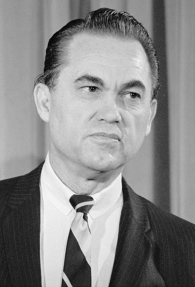
George Wallace
Wikipedia
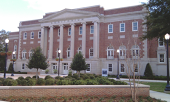
Foster Auditorium
Wikipedia
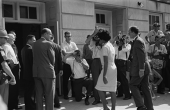
Vivian Malone
Wikipedia
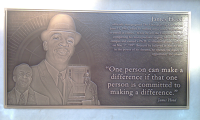
James Hood
Wikipedia
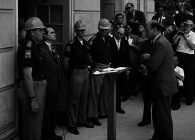
Stand in the Schoolhouse Door
Wikipedia

National Guard
Wikipedia

Civil rights movement
Wikipedia

List of governors of Alabama
Wikipedia

Alabama
Wikipedia

George Wallace
Wikipedia

Stand in the Schoolhouse Door
Wikipedia

Foster Auditorium
Wikipedia

University of Alabama
Wikipedia

Vivian Malone Jones
Wikipedia

James Hood
Wikipedia

National Guard
Wikipedia

Racial segregation
Wikipedia

Nicholas Katzenbach
Wikipedia
What Else Happened on June 11
eclipse lunar 32 del ciclo Saros.

Eratosthenes calculated that Greek forces sacked and burned Troy in 1184 BC, ending a decade-long siege that shattered the city's power and reshaped the Aegean …
según los cálculos de Eratóstenes, finaliza la Guerra de Troya (los aqueos saquean y destruyen la ciudad de Troya).

Alexander collapsed in Babylon after days of fever or agonizing pain from a bowl of wine, leaving no clear heir behind. His sudden death at thirty-two shattered…
A Roman army, cut off and dying of thirst in Moravia, was saved by a thunderstorm. That's the official story. But Marcus Aurelius, a Stoic philosopher who spent…
Tang China was paying ransom for its own people — prisoners taken during the chaos of a civil war that had ended years earlier. Emperor Taizong sent envoys nort…
Talk to History
Have a conversation with historical figures who witnessed this era. Ask questions, explore perspectives, and bring history to life.