D-Day Lands Allied Troops: Normandy Invasion Begins
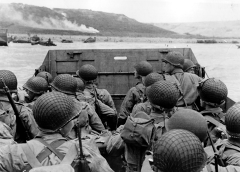
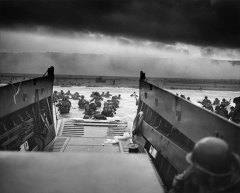
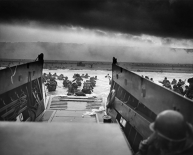
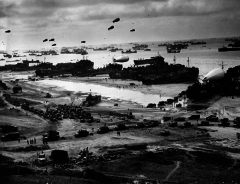
Supreme Commander Dwight Eisenhower had already drafted a statement accepting full responsibility for failure. On the morning of June 6, 1944, over 156,000 Allied troops crossed the English Channel in the largest amphibious invasion in human history, landing on five beaches along a 50-mile stretch of the Normandy coast. The note in Eisenhower’s pocket, never released, read: "The troops, the air and the Navy did all that bravery and devotion to duty could do. If any blame or fault attaches to the attempt it is mine alone." Operation Overlord had been in planning for two years. The Allies assembled 6,939 naval vessels, 11,590 aircraft, and an army drawn from a dozen nations in staging areas across southern England. An elaborate deception campaign, Operation Fortitude, used inflatable tanks, fake radio traffic, and the reputation of General George Patton to convince the German high command that the real invasion would target Pas-de-Calais, 150 miles to the northeast. Hitler kept his most powerful panzer divisions there for weeks after the Normandy landings, waiting for an attack that never came. The landings were brutal and chaotic. At Omaha Beach, American troops from the 1st and 29th Infantry Divisions faced entrenched German defenders on bluffs overlooking the shore and suffered roughly 2,400 casualties. Soldiers drowned under the weight of their equipment in water deeper than expected. Tanks designed to float sank. Naval bombardment had missed most of the defensive positions. At Utah Beach, Gold, Juno, and Sword, resistance was lighter, and forces pushed inland by nightfall. Airborne troops who had parachuted behind the beaches in the early morning hours secured bridges and road junctions despite being scattered across the countryside. By the end of June 6, the Allies held a tenuous beachhead and had suffered approximately 10,000 casualties, including 4,414 confirmed dead. The number was lower than planners had feared. Within a week, 326,000 troops, 50,000 vehicles, and 100,000 tons of supplies had crossed the beaches. Paris was liberated on August 25. Germany surrendered on May 8, 1945. The war Eisenhower feared might be lost on that single Tuesday morning was won in eleven months.
June 6, 1944
82 years ago
Key Figures & Places
What Else Happened on June 6
A dying emperor handed his empire to a seven-year-old. Alexander, Leo VI's brother, spent his brief reign undoing everything his predecessor built — then collap…
A massive earthquake estimated between magnitude 8.2 and 8.8 struck the Lo Mustang region, leveling structures across Tibet and Nepal. The tremors devastated Ka…
Venetian forces crushed Maximilian I’s army in Friulia, forcing the Holy Roman Emperor to sign a humiliating three-year truce. This defeat halted Habsburg expan…
Swiss pikemen charged downhill into the French camp at dawn and shattered one of Europe’s most professional armies in under two hours. The Battle of Novara on J…
Gustav Vasa ascended the Swedish throne, dissolving the Kalmar Union that had bound Sweden, Denmark, and Norway under a single monarch for over a century. This …
Sir Francis Drake’s fleet razed the Spanish settlement of St. Augustine, burning the wooden fort and looting the town’s treasury. This scorched-earth raid force…
Talk to History
Have a conversation with historical figures who witnessed this era. Ask questions, explore perspectives, and bring history to life.