Securities Act Enacted: New Deal Ends Wall Street Chaos
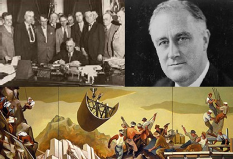
Wall Street operated on the honor system for 150 years, and the crash of 1929 revealed exactly how much that honor was worth. Congress passed the Securities Exchange Act on June 6, 1934, creating the Securities and Exchange Commission to regulate stock exchanges, enforce disclosure requirements, and prosecute fraud. For the first time in American history, the federal government would police the markets with subpoena power and the authority to shut down trading. The 1929 crash had exposed a financial system riddled with manipulation. Insiders routinely traded on nonpublic information. Pool operators coordinated buying campaigns to inflate stock prices, then dumped their shares on unsuspecting retail investors. Companies published financial statements that ranged from misleading to fictional. Short sellers spread false rumors to drive prices down. Banks lent depositors’ money to speculators who bet it on margins as thin as ten percent. When the bubble burst, $30 billion in market value evaporated in two weeks, and the banking system collapsed under the weight of bad loans. Senate hearings chaired by Ferdinand Pecora in 1933 and 1934 documented the abuses in withering detail. Pecora, a former New York prosecutor, forced J.P. Morgan Jr. to admit he had paid no income tax in 1930, 1931, or 1932. National City Bank’s chairman, Charles Mitchell, was shown to have sold bank stock to his wife at an artificial loss to reduce his tax bill. The testimony destroyed public trust in the financial establishment and created the political will for regulation that had not existed before the crash. President Roosevelt appointed Joseph P. Kennedy, himself a former stock speculator, as the SEC’s first chairman, reasoning that it took a fox to guard a henhouse. Kennedy proved effective, establishing the commission’s credibility with the financial industry and building an enforcement apparatus that endured. The SEC’s framework of mandatory disclosure, registration requirements, and antifraud rules became the model for securities regulation worldwide and remains the foundation of American capital markets ninety years later.
June 6, 1934
92 years ago
Key Figures & Places
What Else Happened on June 6
A dying emperor handed his empire to a seven-year-old. Alexander, Leo VI's brother, spent his brief reign undoing everything his predecessor built — then collap…
A massive earthquake estimated between magnitude 8.2 and 8.8 struck the Lo Mustang region, leveling structures across Tibet and Nepal. The tremors devastated Ka…
Venetian forces crushed Maximilian I’s army in Friulia, forcing the Holy Roman Emperor to sign a humiliating three-year truce. This defeat halted Habsburg expan…
Swiss pikemen charged downhill into the French camp at dawn and shattered one of Europe’s most professional armies in under two hours. The Battle of Novara on J…
Gustav Vasa ascended the Swedish throne, dissolving the Kalmar Union that had bound Sweden, Denmark, and Norway under a single monarch for over a century. This …
Sir Francis Drake’s fleet razed the Spanish settlement of St. Augustine, burning the wooden fort and looting the town’s treasury. This scorched-earth raid force…
Talk to History
Have a conversation with historical figures who witnessed this era. Ask questions, explore perspectives, and bring history to life.