Native Americans Granted Citizenship: 1924 Act Recognizes Rights
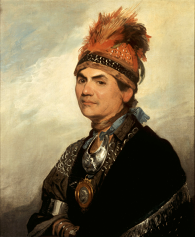
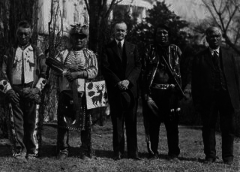
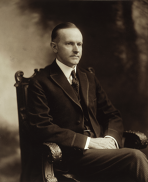
Roughly 125,000 Native Americans woke up as citizens of the United States on June 2, 1924, without anyone asking whether they wanted to be. President Calvin Coolidge signed the Indian Citizenship Act that day, extending birthright citizenship to all Indigenous people born within U.S. borders. The remaining third of the Native population who had not already acquired citizenship through military service, land allotment, or marriage to citizens were now, by federal decree, Americans. The act emerged from a complex mix of motives. Some 12,000 Native Americans had served in the U.S. military during World War I, many enlisting voluntarily despite having no obligation to a government that classified them as wards of the state. Their service generated widespread public sympathy. But the push for citizenship also aligned with assimilationist policies designed to dissolve tribal identity. Reformers believed that making Native people citizens would accelerate their absorption into white American society, weakening communal land holdings and traditional governance. Citizenship proved far less transformative than either its supporters or critics expected. The act said nothing about voting rights, which remained controlled by individual states. Arizona, New Mexico, and Utah used literacy tests, poll taxes, and residency requirements to block Native voters for decades. Maine did not fully enfranchise its Native population until 1967. The federal government continued to treat tribal nations as dependent entities, and the Bureau of Indian Affairs maintained its control over reservation life with little interruption. The contradiction embedded in the law persists. Native Americans hold both U.S. citizenship and membership in sovereign tribal nations, a dual status that creates jurisdictional tangles in criminal law, taxation, and resource management that courts are still sorting out a century later.
June 2, 1924
102 years ago
Key Figures & Places
What Else Happened on June 2
Karl Nobiling didn't just shoot the Kaiser — he shot him twice, from a second-floor window in Berlin, loaded with birdshot. Wilhelm I was 81 years old and survi…
A teenage emperor grabbed a sword and marched into the street himself. Cao Mao, 20 years old, knew Sima Zhao controlled everything — the army, the court, his ow…
Vandal forces breached the walls of Rome, systematically stripping the city of its wealth and sacred treasures over fourteen days of relentless looting. This or…
The Caliphate of Córdoba was supposed to be untouchable. At its peak under Abd al-Rahman III, it was the most sophisticated state in Western Europe — libraries,…
Bohemond of Taranto bribed a guard. After seven months of siege warfare, starvation, and plague, the First Crusade’s capture of Antioch on June 3, 1098, came do…
Virginia's original charter didn't just claim a colony. It claimed a continent. Issued by James I in 1606 and expanded in 1609, the grant stretched from the Atl…
Talk to History
Have a conversation with historical figures who witnessed this era. Ask questions, explore perspectives, and bring history to life.