

Crusaders Seize Antioch: Victory Bolsters Holy Land Campaign
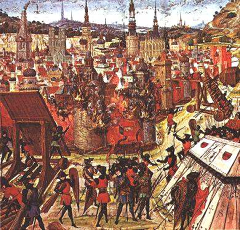
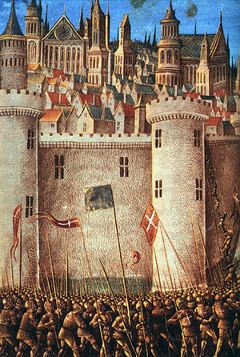
Bohemond of Taranto bribed a guard. After seven months of siege warfare, starvation, and plague, the First Crusade’s capture of Antioch on June 3, 1098, came down to a single Armenian convert named Firouz who opened a tower gate in the pre-dawn darkness. Crusader soldiers poured through the gap and slaughtered the Muslim garrison before most defenders realized the walls had been breached. The siege had nearly destroyed the Crusaders before it destroyed Antioch. An army that began with perhaps 30,000 fighting men was reduced to a fraction of that number by disease, desertion, and Turkish raids on their supply lines. The besiegers were themselves besieged, cut off from coastal ports and forced to eat horses, tree bark, and allegedly worse. When reinforcements failed to arrive from Constantinople, several prominent Crusade leaders abandoned the expedition entirely. Capturing the city solved nothing. Just four days later, a massive Muslim relief army under Kerbogha of Mosul arrived and surrounded Antioch, trapping the Crusaders inside the walls they had just taken. For three weeks, the situation appeared hopeless. Starvation returned. Morale collapsed until a French peasant named Peter Bartholomew claimed to have discovered the Holy Lance beneath the Cathedral of St. Peter. Whether authentic or fabricated, the relic electrified the army. On June 28, the Crusaders charged out of Antioch and routed Kerbogha’s forces in a battle that stunned the Islamic world. Antioch’s fall opened the road to Jerusalem, which the Crusaders captured a year later. Bohemond kept Antioch for himself, establishing a Crusader principality that survived until 1268. The city’s capture demonstrated that the First Crusade succeeded less through military brilliance than through fanatical persistence and a remarkable capacity to endure suffering.
June 2, 1098
928 years ago
Key Figures & Places


What Else Happened on June 2
Karl Nobiling didn't just shoot the Kaiser — he shot him twice, from a second-floor window in Berlin, loaded with birdshot. Wilhelm I was 81 years old and survi…
A teenage emperor grabbed a sword and marched into the street himself. Cao Mao, 20 years old, knew Sima Zhao controlled everything — the army, the court, his ow…
Vandal forces breached the walls of Rome, systematically stripping the city of its wealth and sacred treasures over fourteen days of relentless looting. This or…
The Caliphate of Córdoba was supposed to be untouchable. At its peak under Abd al-Rahman III, it was the most sophisticated state in Western Europe — libraries,…
Virginia's original charter didn't just claim a colony. It claimed a continent. Issued by James I in 1606 and expanded in 1609, the grant stretched from the Atl…
Four Récollet friars stepped off a ship in Quebec City, marking the arrival of the first Catholic missionaries in New France. Their mission to convert the indig…
Talk to History
Have a conversation with historical figures who witnessed this era. Ask questions, explore perspectives, and bring history to life.