Marconi Patents Radio: The Dawn of Wireless Communication
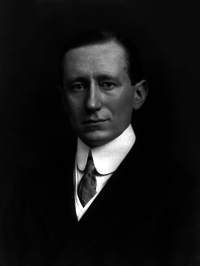
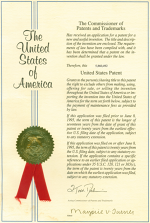
Guglielmo Marconi was twenty-one years old and had no formal scientific training when he filed British patent No. 12039 on June 2, 1896, for a system of wireless telegraphy. The Italian inventor had spent two years experimenting in his father’s attic near Bologna, building on Heinrich Hertz’s proof that electromagnetic waves could travel through air. What Marconi added was not new physics but engineering stubbornness: a grounded antenna, a coherer detector, and the conviction that radio signals could travel far enough to be commercially useful. Marconi had first approached the Italian government for funding and been turned away. His Irish-born mother, Annie Jameson, connected him to contacts in Britain, where the Post Office and Admiralty were actively searching for alternatives to undersea telegraph cables. Marconi arrived in London in February 1896 with a suitcase full of equipment and, according to family lore, a letter of introduction from the Italian ambassador. The patent’s claims were broad and immediately contested. Nikola Tesla, Oliver Lodge, and Jagadish Chandra Bose had all demonstrated wireless transmission of electromagnetic signals before Marconi filed. Lodge accused Marconi of appropriating his work. The U.S. Supreme Court would eventually rule in 1943, after both men were dead, that Tesla’s patents had priority. Marconi’s contribution was never the underlying science but the relentless drive to turn laboratory curiosities into a working communications network. By 1901, Marconi transmitted the letter "S" in Morse code from Cornwall to Newfoundland, proving that radio waves followed the curvature of the Earth rather than shooting off into space. The demonstration shattered the distance barrier for human communication and made Marconi, at twenty-seven, the most famous inventor in the world.
June 2, 1896
130 years ago
Key Figures & Places
What Else Happened on June 2
Karl Nobiling didn't just shoot the Kaiser — he shot him twice, from a second-floor window in Berlin, loaded with birdshot. Wilhelm I was 81 years old and survi…
A teenage emperor grabbed a sword and marched into the street himself. Cao Mao, 20 years old, knew Sima Zhao controlled everything — the army, the court, his ow…
Vandal forces breached the walls of Rome, systematically stripping the city of its wealth and sacred treasures over fourteen days of relentless looting. This or…
The Caliphate of Córdoba was supposed to be untouchable. At its peak under Abd al-Rahman III, it was the most sophisticated state in Western Europe — libraries,…
Bohemond of Taranto bribed a guard. After seven months of siege warfare, starvation, and plague, the First Crusade’s capture of Antioch on June 3, 1098, came do…
Virginia's original charter didn't just claim a colony. It claimed a continent. Issued by James I in 1606 and expanded in 1609, the grant stretched from the Atl…
Talk to History
Have a conversation with historical figures who witnessed this era. Ask questions, explore perspectives, and bring history to life.