Napoleon Exiled to Elba: Treaty Ends Napoleonic Wars
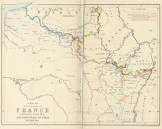
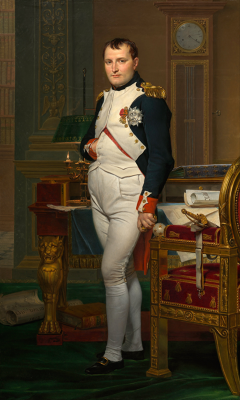
Napoleon's first exile began with a treaty that dismantled his empire and left him with a small island and a pension. On May 30, 1814, the Treaty of Paris formally ended the War of the Sixth Coalition, restored the French monarchy under Louis XVIII, and reduced France's borders to those of 1792, erasing twenty years of conquest. The treaty followed Napoleon's abdication on April 11, 1814, forced by the defection of his marshals after allied armies entered Paris. Austria, Russia, Prussia, and Britain dictated the terms. France lost all territorial gains made since the Revolution: Belgium, the left bank of the Rhine, Savoy, and Nice reverted to their previous sovereigns or became independent states. The allies treated France with surprising leniency. There were no reparations. France retained its pre-revolutionary borders, which were larger than any other European state except Russia. The allied powers wanted a stable France under a legitimate monarchy, not a humiliated nation that would seek revenge. Talleyrand, representing Louis XVIII, skillfully exploited divisions among the victors to secure favorable terms. Napoleon was granted sovereignty over the island of Elba in the Mediterranean, with an annual pension of two million francs from the French government and permission to keep a personal guard of 1,000 soldiers. It was a remarkably generous arrangement for a man who had plunged Europe into two decades of war. The generosity proved insufficient. Napoleon spent less than a year on Elba. On February 26, 1815, he escaped with his guard, landed in southern France, and marched to Paris, gathering an army along the way. Louis XVIII fled. The Hundred Days ended at Waterloo on June 18, 1815. This time, the allies sent Napoleon to Saint Helena in the South Atlantic, 4,000 miles from the nearest land, where he died in 1821. The 1814 Treaty of Paris attempted to restore the European order that Napoleon had demolished. The 1815 Congress of Vienna, convened after his final defeat, succeeded more durably, creating a balance of power that prevented major European war for nearly a century.
May 30, 1814
212 years ago
Key Figures & Places
What Else Happened on May 30
Every tree within fifteen kilometres of Jerusalem. Gone. The Romans needed timber for their siege engines, and Titus didn't hesitate—ancient olive groves, orcha…
A tax collector named John Bampton demanded money from villagers in Brentwood, Essex—three times what they'd already paid. The men of Fobbing told him no. Just …
Jerome of Prague watched Jan Hus burn at the same council a year earlier, then recanted his own beliefs to save himself. Didn't work. He spent eleven months in …
English commanders rigged a tribunal to destroy the teenage girl who had reversed the course of their war. Joan of Arc's condemnation trial began in Rouen in Ja…
Moderate Utraquist forces destroyed the radical Taborite army at Lipany, killing their leader Prokop the Great and ending twenty years of Hussite religious warf…
The rebellion lasted thirteen days. Prince Zhu Zhifan controlled China's northwest, claimed the throne his birthright, and commanded enough men to make Beijing …
Talk to History
Have a conversation with historical figures who witnessed this era. Ask questions, explore perspectives, and bring history to life.