Joan of Arc's Trial Begins: Injustice Sealed
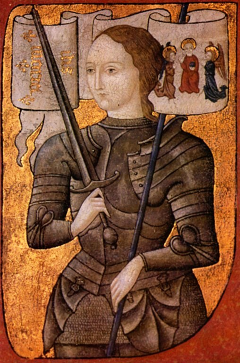
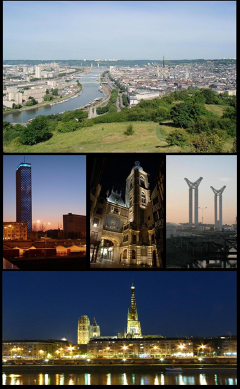
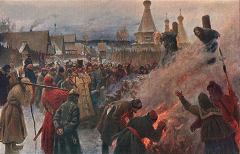
English commanders rigged a tribunal to destroy the teenage girl who had reversed the course of their war. Joan of Arc's condemnation trial began in Rouen in January 1431, conducted by Bishop Pierre Cauchon, a Burgundian ally of the English crown who violated ecclesiastical law at every turn to ensure a guilty verdict. Joan was burned at the stake on May 30, 1431. She was 19 years old. The trial was political from its first session. Joan had been captured at Compiegne in May 1430 and sold to the English by the Burgundians for 10,000 livres. English commanders needed Joan condemned as a heretic to delegitimize Charles VII's coronation, which Joan had made possible. Cauchon assembled a panel of pro-English clerics at Rouen Castle and began interrogations in February 1431. Joan was denied legal counsel, a direct violation of Inquisitorial procedure. She was held in a military prison guarded by English soldiers rather than a church prison with female attendants, as the law required. The interrogators, many of them university theologians, pressed her on her visions, her male clothing, and whether she believed she was in God's grace. Joan's answers were often remarkably shrewd: "If I am not, may God put me there; if I am, may God keep me there." The charges centered on heresy and the wearing of men's clothing, which the tribunal treated as evidence of diabolical influence. Joan briefly recanted under threat of immediate execution, then retracted her recantation days later when she resumed wearing men's clothing in her cell. Whether she chose to or was forced to by guards who removed her women's garments is disputed. The burning took place in the Old Market Square of Rouen on May 30. The executioner reportedly had difficulty arranging the pyre to ensure Joan could be seen by the crowd, as ordered. She called out to Jesus repeatedly and asked for a crucifix to be held before her eyes. English soldiers wept. Twenty-five years later, a papal court overturned the conviction and declared Joan innocent. Cauchon's procedural violations were so egregious that the retrial documented them at length. Joan was canonized as a saint in 1920.
May 30, 1431
595 years ago
Key Figures & Places

What Else Happened on May 30
Every tree within fifteen kilometres of Jerusalem. Gone. The Romans needed timber for their siege engines, and Titus didn't hesitate—ancient olive groves, orcha…
A tax collector named John Bampton demanded money from villagers in Brentwood, Essex—three times what they'd already paid. The men of Fobbing told him no. Just …
Jerome of Prague watched Jan Hus burn at the same council a year earlier, then recanted his own beliefs to save himself. Didn't work. He spent eleven months in …
Moderate Utraquist forces destroyed the radical Taborite army at Lipany, killing their leader Prokop the Great and ending twenty years of Hussite religious warf…
The rebellion lasted thirteen days. Prince Zhu Zhifan controlled China's northwest, claimed the throne his birthright, and commanded enough men to make Beijing …
King Henry VIII married Jane Seymour just eleven days after the execution of Anne Boleyn. By choosing a woman from the gentry rather than a foreign princess, He…
Talk to History
Have a conversation with historical figures who witnessed this era. Ask questions, explore perspectives, and bring history to life.