

West Africa Unites: ECOWAS Established in Lagos
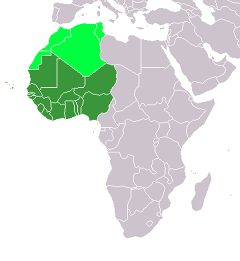
Fifteen West African nations signed a treaty in Lagos and bet their collective future on economic integration. On May 28, 1975, the Treaty of Lagos established the Economic Community of West African States (ECOWAS), creating a regional bloc intended to promote trade, cooperation, and eventually a common market among nations that shared borders but often little else. The driving force was Nigerian Head of State Yakubu Gowon, who saw regional integration as both an economic necessity and a way to project Nigeria's leadership in West Africa. Togo's President Gnassingbe Eyadema co-sponsored the initiative. The 15 founding members spanned anglophone, francophone, and lusophone nations with vastly different colonial legacies, legal systems, and economic structures. The treaty established ambitious goals: elimination of customs duties between member states, a common external tariff, free movement of people, and harmonization of economic policies. A secretariat was established in Lagos, later moved to Abuja, to coordinate implementation. Progress on economic integration was slow. National interests, currency incompatibilities, and the dominance of informal cross-border trade complicated formal harmonization. Francophone members maintained parallel ties to France through the CFA franc zone, creating a bloc within a bloc. ECOWAS found its most consequential role not in economics but in security. Beginning with the Liberian civil war in 1989, the organization deployed ECOMOG peacekeeping forces to conflicts in Liberia, Sierra Leone, Guinea-Bissau, and Cote d'Ivoire. Nigerian-led military interventions, authorized under ECOWAS frameworks, became the primary mechanism for managing West African conflicts in the post-Cold War era. The community now encompasses 400 million people and accounts for the largest regional economy in sub-Saharan Africa. Free movement protocols allow ECOWAS citizens to travel across member states without visas, one of the few treaty provisions that functions as originally intended. Fifty years after Lagos, ECOWAS remains an imperfect but indispensable institution, holding together a region where borders drawn by European colonizers rarely correspond to economic or ethnic realities.
May 28, 1975
51 years ago
Key Figures & Places


What Else Happened on May 28
The sun went dark mid-battle, and both armies dropped their weapons. Thales of Miletus had predicted it—the first recorded solar eclipse forecast in history, Ma…
Li Shimin had 3,500 cavalry. Dou Jiande brought 100,000 men to Hulao Pass in Henan. The numbers didn't matter. Shimin's father had just founded the Tang Dynasty…
They murdered the inquisitors in their sleep. William Arnaud and eleven companions were hunting heretics in Languedoc when Cathars stormed their lodgings at Avi…
They called it "everlasting." James IV of Scotland married Margaret Tudor in 1503, her father Henry VII footing the bill for a wedding that cost more than Scotl…
Cranmer didn't even have the authority yet—his papal bulls confirming him as Archbishop wouldn't arrive for another two months. But Henry needed this marriage l…

King Philip II assembled the largest naval force Europe had ever seen and sent it to conquer England. The English Channel destroyed it. The Spanish Armada saile…
Talk to History
Have a conversation with historical figures who witnessed this era. Ask questions, explore perspectives, and bring history to life.