Spanish Armada Defeated: England's Naval Supremacy Secured
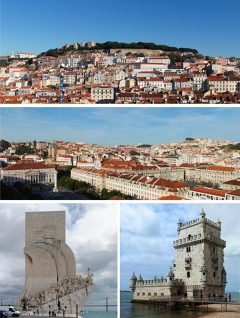
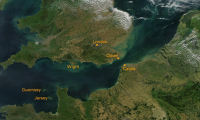
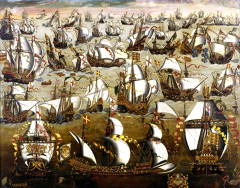
King Philip II assembled the largest naval force Europe had ever seen and sent it to conquer England. The English Channel destroyed it. The Spanish Armada sailed from Lisbon on May 28, 1588, with 130 ships, 8,000 sailors, and 18,000 soldiers, tasked with crossing the Channel, collecting the Duke of Parma's invasion army from the Netherlands, and landing it on English soil. Philip had multiple grievances. Elizabeth I had been supporting Dutch Protestant rebels against Spanish rule. English privateers, particularly Francis Drake, had been raiding Spanish treasure ships and ports. Elizabeth had executed the Catholic Mary, Queen of Scots, in 1587, removing Philip's preferred candidate for the English throne. He decided invasion was the only solution. The Armada entered the Channel in late July and was harassed northward by the faster, more maneuverable English fleet under Lord Howard of Effingham, with Drake, Hawkins, and Frobisher commanding squadrons. The English avoided close engagement, using their superior gunnery range to pick at the Spanish formation. On the night of August 7, English fireships broke the Armada's defensive crescent formation at Gravelines, and the Battle of Gravelines the next day inflicted serious damage. The decisive blow came from the weather. Unable to return south through the Channel, the Armada was forced north around Scotland and Ireland. Atlantic storms wrecked dozens of ships on the rocky coasts. Roughly half the fleet and two-thirds of the men never returned to Spain. Disease killed many of those who did make it home. The Armada's failure did not end the war, which continued until 1604, and Spain remained a major naval power for decades. But the campaign shattered the aura of Spanish invincibility and confirmed England as a serious maritime competitor. Elizabeth's speech at Tilbury, whether delivered exactly as later reported or not, entered the national mythology permanently. England's identity as an island fortress, defended by its navy and its weather, crystallized in the summer of 1588.
May 28, 1588
438 years ago
Key Figures & Places
What Else Happened on May 28
The sun went dark mid-battle, and both armies dropped their weapons. Thales of Miletus had predicted it—the first recorded solar eclipse forecast in history, Ma…
Li Shimin had 3,500 cavalry. Dou Jiande brought 100,000 men to Hulao Pass in Henan. The numbers didn't matter. Shimin's father had just founded the Tang Dynasty…
They murdered the inquisitors in their sleep. William Arnaud and eleven companions were hunting heretics in Languedoc when Cathars stormed their lodgings at Avi…
They called it "everlasting." James IV of Scotland married Margaret Tudor in 1503, her father Henry VII footing the bill for a wedding that cost more than Scotl…
Cranmer didn't even have the authority yet—his papal bulls confirming him as Archbishop wouldn't arrive for another two months. But Henry needed this marriage l…
The supply lists alone took three months to compile: 130 ships needed 300,000 pounds of biscuits, 600,000 pounds of salt pork, and fourteen million gallons of w…
Talk to History
Have a conversation with historical figures who witnessed this era. Ask questions, explore perspectives, and bring history to life.