Sierra Club Founded: The Birth of Modern Environmentalism
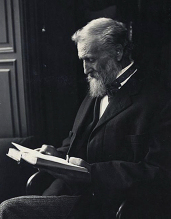
John Muir had been arguing with anyone who would listen that America's wilderness was being destroyed. On May 28, 1892, he convinced 27 people to do something about it. They founded the Sierra Club in a San Francisco law office, elected Muir president, and created an organization that would define the American environmental movement for the next century. Muir had spent decades exploring and writing about the Sierra Nevada, particularly Yosemite Valley and its surrounding wilderness. His essays in magazines like The Century had attracted a national readership and made him the country's most famous advocate for wild places. But advocacy alone was not stopping the loggers, miners, and sheep ranchers who were steadily stripping the mountains. The Sierra Club's original mission was "to explore, enjoy, and render accessible the mountain regions of the Pacific Coast" and "to enlist the support and cooperation of the people and government in preserving the forests and other natural features of the Sierra Nevada." The founding members were scientists, professors, and professionals from the San Francisco Bay Area. The club's first major campaign was defending Yosemite National Park, created in 1890 but inadequately protected. Muir took President Theodore Roosevelt on a camping trip to Yosemite in 1903, and the president emerged from three nights under the sequoias ready to expand federal protection. The trip led directly to Yosemite Valley being incorporated into the national park. The club's greatest defeat, and its most galvanizing moment, was the Hetch Hetchy Dam fight. San Francisco wanted to dam a valley inside Yosemite for its water supply. Muir campaigned furiously against it, calling it "dam Hetch Hetchy as well as dam for water tanks." He lost. The dam was built. Muir died the following year, in 1914, reportedly heartbroken. Hetch Hetchy transformed the Sierra Club from a hiking society into a political organization. The loss taught environmentalists that enjoying nature was not enough; they had to fight for it in legislatures and courts. That lesson shaped every environmental battle that followed, from the Clean Air Act to the defense of the Arctic National Wildlife Refuge.
May 28, 1892
134 years ago
Key Figures & Places
What Else Happened on May 28
The sun went dark mid-battle, and both armies dropped their weapons. Thales of Miletus had predicted it—the first recorded solar eclipse forecast in history, Ma…
Li Shimin had 3,500 cavalry. Dou Jiande brought 100,000 men to Hulao Pass in Henan. The numbers didn't matter. Shimin's father had just founded the Tang Dynasty…
They murdered the inquisitors in their sleep. William Arnaud and eleven companions were hunting heretics in Languedoc when Cathars stormed their lodgings at Avi…
They called it "everlasting." James IV of Scotland married Margaret Tudor in 1503, her father Henry VII footing the bill for a wedding that cost more than Scotl…
Cranmer didn't even have the authority yet—his papal bulls confirming him as Archbishop wouldn't arrive for another two months. But Henry needed this marriage l…
King Philip II assembled the largest naval force Europe had ever seen and sent it to conquer England. The English Channel destroyed it. The Spanish Armada saile…
Talk to History
Have a conversation with historical figures who witnessed this era. Ask questions, explore perspectives, and bring history to life.