Hoover Takes FBI Helm: Five Decades of Power
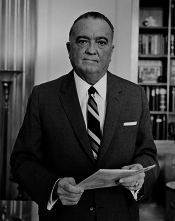
J. Edgar Hoover was 29 years old when Attorney General Harlan Fiske Stone appointed him director of the Bureau of Investigation on May 10, 1924. He would hold the position for 48 years, serving under eight presidents, transforming a corrupt and ineffective agency into the most powerful domestic law enforcement organization in the world, and wielding secret files against political enemies with an impunity that no other unelected official in American history has matched. Hoover inherited an agency in crisis. The Bureau of Investigation under his predecessor, William Burns, had been used as a political weapon during the Palmer Raids of 1919-20, conducting mass arrests of suspected radicals with no regard for civil liberties. Burns was forced out after the Teapot Dome scandal revealed corruption throughout the Justice Department. Stone gave Hoover the job with explicit instructions to professionalize the bureau and remove it from politics. Hoover fulfilled the first mandate brilliantly. He imposed strict hiring standards, requiring agents to hold law or accounting degrees. He centralized fingerprint records, created a national crime laboratory, and established the FBI National Academy to train local police. The bureau's pursuit of Depression-era outlaws like John Dillinger, Pretty Boy Floyd, and Machine Gun Kelly turned Hoover into a national celebrity and the FBI into a symbol of incorruptible federal authority. The second mandate, to stay out of politics, Hoover violated comprehensively. He compiled secret dossiers on politicians, journalists, activists, and anyone he considered a threat to national security or his own position. His COINTELPRO operations infiltrated and disrupted civil rights organizations, antiwar groups, and the Communist Party through surveillance, disinformation, and provocation. He bugged Martin Luther King Jr.'s hotel rooms and sent an anonymous letter suggesting King should commit suicide. No president dared fire him. The files were too dangerous, and Hoover's public reputation too strong. He died in office on May 2, 1972, and Congress subsequently passed legislation limiting FBI directors to a single ten-year term. The agency Hoover built remains one of his legacies; the surveillance state he pioneered is the other.
May 10, 1924
102 years ago
Key Figures & Places
What Else Happened on May 10
The Han astronomers didn't call it a sunspot. They recorded a black vapor within the sun—specific enough to measure its position, detailed enough to date: 28 BC…
Four Roman legions and 80,000 soldiers arrived at the walls of Jerusalem in the spring of 70 AD, and Titus, the emperor's son and field commander, launched his …
Scottish nobles gathered at Norham to acknowledge Edward I as their feudal overlord, hoping he would settle the chaotic succession crisis following the death of…
Temür Khan ascended the throne as the second Yuan emperor, securing his power after a brief succession struggle following Kublai Khan’s death. His reign stabili…
Amerigo Vespucci departed Cádiz on his first expedition across the Atlantic, aiming to map the coastlines of the Americas. His subsequent letters describing the…
Columbus sailed past two small Caribbean islands and couldn't stop talking about the turtles. Thousands of them. Maybe tens of thousands crawling across beaches…
Talk to History
Have a conversation with historical figures who witnessed this era. Ask questions, explore perspectives, and bring history to life.