

Titus Besieges Jerusalem: Roman Legions Breach the Wall
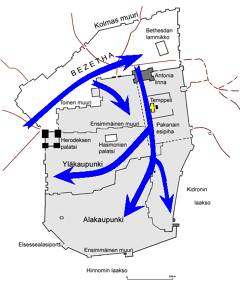
Four Roman legions and 80,000 soldiers arrived at the walls of Jerusalem in the spring of 70 AD, and Titus, the emperor's son and field commander, launched his first full assault against the city's Third Wall on May 10. The siege that followed lasted five months, destroyed the Second Temple, and ended Jewish sovereignty in the land of Israel for nearly two thousand years. Jerusalem in 70 AD was tearing itself apart before the Romans arrived. Three rival Jewish factions fought for control of the city during the Great Revolt against Rome. Simon bar Giora held the upper city, John of Giscala controlled the Temple Mount, and a smaller Zealot faction held the inner Temple courts. The factions burned each other's grain stores in acts of internecine warfare that would prove catastrophic during the siege. Titus's army breached the Third Wall, the city's outermost fortification, within fifteen days. The Second Wall fell shortly after. But the Antonia Fortress and the Temple Mount, connected by massive Herodian stonework, proved far more difficult. The defenders fought with the desperation of people who believed they were defending God's house. Roman siege engines were burned. Tunnels were dug and collapsed. Titus reportedly wanted to preserve the Temple, but the fanaticism of the defense made conventional assault unavoidable. The Temple was destroyed on the ninth of Av (approximately August 4) when Roman soldiers set fire to the complex during a final assault. The historian Josephus, a Jewish commander who had defected to the Romans, described gold melting from the Temple's decorations and flowing between the stones, which soldiers later pried apart to recover it. The destruction of the Temple eliminated the center of Jewish religious practice and transformed Judaism from a temple-based sacrificial religion into one organized around synagogue worship, prayer, and textual study. An estimated 1.1 million people died during the siege, according to Josephus, though modern historians consider this figure exaggerated. Tens of thousands were enslaved. The Arch of Titus in Rome, erected to celebrate the victory, depicts soldiers carrying the Temple's menorah and sacred vessels in triumphal procession. The Ninth of Av remains a day of mourning in Judaism, and the Western Wall, the last remnant of the Temple Mount's retaining walls, remains the holiest site where Jews can pray.
May 10, 70
1956 years ago
Key Figures & Places
What Else Happened on May 10
The Han astronomers didn't call it a sunspot. They recorded a black vapor within the sun—specific enough to measure its position, detailed enough to date: 28 BC…
Scottish nobles gathered at Norham to acknowledge Edward I as their feudal overlord, hoping he would settle the chaotic succession crisis following the death of…
Temür Khan ascended the throne as the second Yuan emperor, securing his power after a brief succession struggle following Kublai Khan’s death. His reign stabili…
Amerigo Vespucci departed Cádiz on his first expedition across the Atlantic, aiming to map the coastlines of the Americas. His subsequent letters describing the…
Columbus sailed past two small Caribbean islands and couldn't stop talking about the turtles. Thousands of them. Maybe tens of thousands crawling across beaches…
Cartier sailed past Newfoundland looking for China. Wrong ocean entirely. He'd already made three attempts to find a Northwest Passage, convinced the riches of …
Talk to History
Have a conversation with historical figures who witnessed this era. Ask questions, explore perspectives, and bring history to life.