Last Spike Driven: America Connects Coast to Coast
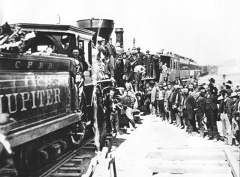
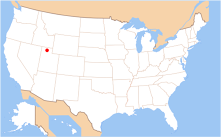
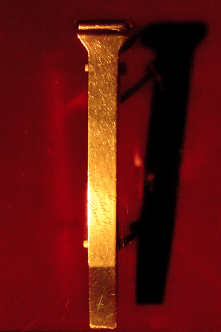
Leland Stanford raised a silver-headed maul and swung at the ceremonial golden spike at Promontory Summit, Utah, on May 10, 1869. He missed. Thomas Durant, representing the Union Pacific, also missed. A railroad worker drove the spike home while the telegraph operator, who had wired the hammer to send an electrical signal, tapped out a single word to waiting cities across the nation: "DONE." The transcontinental railroad connected 1,776 miles of track between Omaha, Nebraska, and Sacramento, California, joining the Union Pacific building west and the Central Pacific building east. The project had been debated for decades but became possible only after the secession of Southern states removed congressional opposition to a northern route. Abraham Lincoln signed the Pacific Railroad Act in 1862, offering land grants and government bonds to the two companies. The construction was an epic of human labor and corporate corruption in roughly equal measure. The Central Pacific employed roughly 12,000 Chinese workers who blasted tunnels through the Sierra Nevada's granite using nitroglycerin, working through winters where snow buried entire camps. Hundreds died in avalanches, explosions, and accidents that the company's records largely ignored. The Union Pacific employed thousands of Irish immigrants and Civil War veterans, laying track across the plains while fending off occasional raids by Indigenous nations whose lands the railroad crossed without treaty or compensation. Both companies were paid by the mile, creating perverse incentives to lay track as quickly as possible regardless of terrain or engineering quality. The Credit Mobilier scandal, in which Union Pacific insiders created a shell construction company to siphon profits, would eventually implicate a vice president and multiple congressmen. The Central Pacific's Big Four investors became the wealthiest men in California. The railroad transformed the United States from a continental abstraction into a functional economic unit. A journey that had taken six months by wagon or four weeks by ship around Cape Horn now took six days by rail. Freight costs plummeted. Settlement of the western territories accelerated dramatically, with devastating consequences for Indigenous nations and the bison herds they depended on. The transcontinental railroad was simultaneously one of the greatest engineering achievements and one of the most destructive forces in nineteenth-century American history.
May 10, 1869
157 years ago
Key Figures & Places

What Else Happened on May 10
The Han astronomers didn't call it a sunspot. They recorded a black vapor within the sun—specific enough to measure its position, detailed enough to date: 28 BC…
Four Roman legions and 80,000 soldiers arrived at the walls of Jerusalem in the spring of 70 AD, and Titus, the emperor's son and field commander, launched his …
Scottish nobles gathered at Norham to acknowledge Edward I as their feudal overlord, hoping he would settle the chaotic succession crisis following the death of…
Temür Khan ascended the throne as the second Yuan emperor, securing his power after a brief succession struggle following Kublai Khan’s death. His reign stabili…
Amerigo Vespucci departed Cádiz on his first expedition across the Atlantic, aiming to map the coastlines of the Americas. His subsequent letters describing the…
Columbus sailed past two small Caribbean islands and couldn't stop talking about the turtles. Thousands of them. Maybe tens of thousands crawling across beaches…
Talk to History
Have a conversation with historical figures who witnessed this era. Ask questions, explore perspectives, and bring history to life.