Colonists Seize Fort Ticonderoga: Revolution Ignites
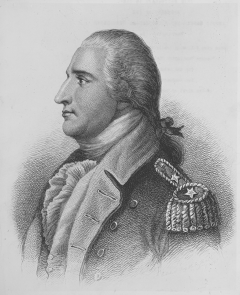
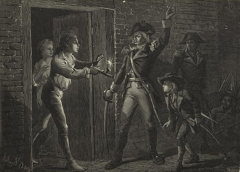
Ethan Allen pounded on the door of the officers' quarters at Fort Ticonderoga before dawn on May 10, 1775, and demanded the garrison's surrender "in the name of the Great Jehovah and the Continental Congress." The British commander, Captain William Delaplace, stumbled out in his nightclothes to find 83 armed colonists already inside the walls. The fort fell without a shot fired, giving the American rebels their first offensive victory and a critical stockpile of artillery that would help win the siege of Boston. Fort Ticonderoga controlled the southern end of Lake Champlain, the water highway connecting New York to Canada. The French had built it as Fort Carillon in 1755 during the Seven Years' War, and the British captured it in 1759. By 1775, the garrison had dwindled to fewer than 50 soldiers, and the fortifications had deteriorated badly. The British considered it a minor frontier post, not a strategic position. The attack was organized independently by two groups who converged awkwardly. Allen led the Green Mountain Boys, a militia from the New Hampshire Grants (later Vermont) that had been fighting New York's land claims for years. Benedict Arnold arrived from Massachusetts carrying a commission from the Massachusetts Committee of Safety to capture the fort. Both men claimed command. Allen's men, who knew and trusted him, refused to serve under Arnold. The two leaders crossed Lake Champlain together in the predawn assault, arguing about authority. The capture was bloodless. A single British sentry fired his musket, which misfired, before the colonists overwhelmed the sleeping garrison. Allen's men also seized the nearby fort at Crown Point the following day. The combined haul included 78 serviceable cannons, six mortars, three howitzers, and large stores of ammunition. Those cannons changed the war. Henry Knox, a 25-year-old Boston bookseller turned artillery officer, transported 60 tons of captured ordnance on ox-drawn sleds across 300 miles of frozen terrain during the winter of 1775-76. When the guns appeared on Dorchester Heights overlooking Boston Harbor in March 1776, the British evacuated the city. The cannon that forced the British out of Boston had been captured by a militia leader in his nightshirt demanding surrender before breakfast.
May 10, 1775
251 years ago
Key Figures & Places
What Else Happened on May 10
The Han astronomers didn't call it a sunspot. They recorded a black vapor within the sun—specific enough to measure its position, detailed enough to date: 28 BC…
Four Roman legions and 80,000 soldiers arrived at the walls of Jerusalem in the spring of 70 AD, and Titus, the emperor's son and field commander, launched his …
Scottish nobles gathered at Norham to acknowledge Edward I as their feudal overlord, hoping he would settle the chaotic succession crisis following the death of…
Temür Khan ascended the throne as the second Yuan emperor, securing his power after a brief succession struggle following Kublai Khan’s death. His reign stabili…
Amerigo Vespucci departed Cádiz on his first expedition across the Atlantic, aiming to map the coastlines of the Americas. His subsequent letters describing the…
Columbus sailed past two small Caribbean islands and couldn't stop talking about the turtles. Thousands of them. Maybe tens of thousands crawling across beaches…
Talk to History
Have a conversation with historical figures who witnessed this era. Ask questions, explore perspectives, and bring history to life.