

Congress Authorizes Gulf War: Force Against Iraq
The vote was closer than the eventual military operation might suggest. The United States Senate authorized the use of force against Iraq on January 12, 1991, by a margin of just 52 to 47, the narrowest vote for military action since the War of 1812. The House passed its resolution more comfortably, 250 to 183, but the combined debate represented the most substantial congressional deliberation on war powers since Vietnam. Saddam Hussein had invaded Kuwait on August 2, 1990, seizing the small oil-rich emirate in less than twelve hours. The United Nations Security Council passed Resolution 678 in November, setting a January 15 deadline for Iraqi withdrawal and authorizing member states to use "all necessary means" to enforce compliance. President George H.W. Bush had already deployed more than 400,000 American troops to Saudi Arabia under Operation Desert Shield. The question before Congress was whether to authorize the president to use them. The Senate debate consumed three days. Opponents argued that economic sanctions needed more time to work and that the administration was rushing toward a war that could produce tens of thousands of American casualties. Supporters countered that sanctions were leaking, that Saddam was fortifying his positions in Kuwait, and that delay would erode the international coalition Bush had painstakingly assembled. Senator Sam Nunn, the influential Armed Services Committee chairman, led the opposition. Senator John Warner and the Republican caucus held firm for authorization. The resolution passed was carefully worded. It authorized force specifically to enforce UN Security Council resolutions, not as a blank check for broader operations. This distinction would matter in subsequent debates about the scope of American military action in the region. Five days after the vote, on January 17, Operation Desert Storm began with a massive air campaign. The ground war lasted one hundred hours. Kuwait was liberated, but Saddam Hussein remained in power, a decision whose consequences would unfold over the next twelve years.
January 12, 1991
35 years ago
Key Figures & Places
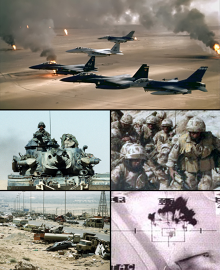
Gulf War
Wikipedia

Iraq
Wikipedia

Kuwait
Wikipedia

Gulf War
Wikipedia

Ba'athist Iraq
Wikipedia

Kuwait
Wikipedia

United States Congress
Wikipedia
United States Armed Forces
Wikipedia

Iraq
Wikipedia

Nasser al-Mohammed al-Sabah
Wikipedia

Iraqi invasion of Kuwait
Wikipedia
1990
Wikipedia

إقبال نعيم
Wikipedia

أرشد ياسين
Wikipedia
What Else Happened on January 12

Basiliscus was the uncle of a dead emperor, and now he wanted the whole throne. He'd schemed and maneuvered until Zeno, a former military commander from Isauria…

Byzantine politics operated by a simple rule: if you wanted the throne, you took it. Basiliscus followed this tradition on January 12, 475, when he was crowned …
A former Danish soldier turned rebel, Gustav Vasa didn't just become king—he rewrote Sweden's entire power structure. After leading a peasant uprising against D…
The rebel turned monarch arrived with a vengeance. Gustav Vasa didn't just become king—he dismantled the Danish stranglehold on Sweden that had lasted generatio…
The peace treaty was less about peace and more about catching their breath. Francis and Charles - two of Europe's most competitive monarchs - had been slugging …

Bayinnaung ascended the throne of the Toungoo dynasty on January 12, 1554, inheriting a modest kingdom in central Burma. Over the next twenty-seven years, he wo…
Talk to History
Have a conversation with historical figures who witnessed this era. Ask questions, explore perspectives, and bring history to life.