Bayinnaung Crowned: Burma's Greatest Empire Rises
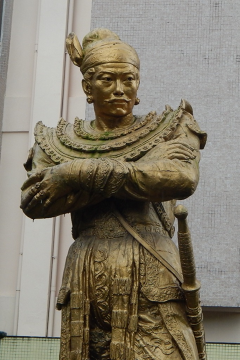
Bayinnaung ascended the throne of the Toungoo dynasty on January 12, 1554, inheriting a modest kingdom in central Burma. Over the next twenty-seven years, he would conquer every neighboring state and assemble the largest empire in the history of Southeast Asia, stretching from modern-day Myanmar through Thailand, Laos, and parts of Cambodia and northeastern India. His predecessor and brother-in-law, King Tabinshwehti, had begun the process of unifying Burma's fractured kingdoms but was assassinated in 1550, throwing the realm into chaos. Bayinnaung spent four years fighting to reclaim the throne from rival claimants before his formal coronation. His military genius lay not just in battlefield tactics but in logistics: he organized supply lines, standardized his army's equipment, and employed captured Portuguese mercenaries who brought European firearms technology to his campaigns. Bayinnaung's most celebrated conquest was the capture of Ayutthaya, the Thai capital, in 1569. The siege required an enormous army estimated at several hundred thousand soldiers and lasted months. The fall of Ayutthaya sent shockwaves across Asia and established Toungoo Burma as the dominant power in mainland Southeast Asia. He also conquered the Shan states, the kingdom of Lan Na in northern Thailand, and the Lao kingdoms of Lan Xang and Vientiane, creating an empire of extraordinary geographic range. Beyond military conquest, Bayinnaung was a devoted patron of Theravada Buddhism. He built pagodas across his empire, convened religious councils, and attempted to standardize Buddhist practice throughout his territories. He banned human sacrifice in conquered regions and promoted trade relationships with Portuguese, Chinese, and Indian merchants. The empire did not survive him. Within two decades of his death in 1581, most of the conquered territories had broken away, and Ayutthaya reclaimed its independence. But Bayinnaung's reign defined the high-water mark of Burmese imperial power, and he remains one of the most revered figures in Myanmar's national mythology.
January 12, 1554
472 years ago
Key Figures & Places

What Else Happened on January 12
Basiliscus was the uncle of a dead emperor, and now he wanted the whole throne. He'd schemed and maneuvered until Zeno, a former military commander from Isauria…
Byzantine politics operated by a simple rule: if you wanted the throne, you took it. Basiliscus followed this tradition on January 12, 475, when he was crowned …
A former Danish soldier turned rebel, Gustav Vasa didn't just become king—he rewrote Sweden's entire power structure. After leading a peasant uprising against D…
The rebel turned monarch arrived with a vengeance. Gustav Vasa didn't just become king—he dismantled the Danish stranglehold on Sweden that had lasted generatio…
The peace treaty was less about peace and more about catching their breath. Francis and Charles - two of Europe's most competitive monarchs - had been slugging …
A muddy riverbank. Thick jungle. Portuguese explorer Francisco Caldeira Castelo Branco steps onto Amazonian soil with 150 soldiers, ready to claim territory at …
Talk to History
Have a conversation with historical figures who witnessed this era. Ask questions, explore perspectives, and bring history to life.