

Lusitania Torpedoed: 1,198 Die, America Inches Toward War
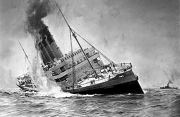
German submarine U-20 sank the RMS Lusitania, drowning 1,198 souls and claiming 128 American lives. This brutal act shattered American neutrality, turning public sentiment decisively against the German Empire and accelerating the nation's path toward entering World War I.
May 7, 1915
111 years ago
Key Figures & Places

Germany
Wikipedia
RMS
Wikipedia

World War I
Wikipedia
submarine
Wikipedia

German Empire
Wikipedia

U-20
Wikipedia
RMS Lusitania
Wikipedia

World War I
Wikipedia
Submarine
Wikipedia

SM U-20 (Germany)
Wikipedia

Sinking of the RMS Lusitania
Wikipedia

RMS Lusitania
Wikipedia

German Empire
Wikipedia

Imperial German Navy
Wikipedia

Irish Sea
Wikipedia

Ocean liner
Wikipedia

Germany
Wikipedia

British
Wikipedia

Versailles, Yvelines
Wikipedia

Treaty of Versailles
Wikipedia

Kabinett Scheidemann
Wikipedia

Central Powers
Wikipedia

Geschichte Rumäniens
Wikipedia

Alexandru Marghiloman
Wikipedia

Romania in World War I
Wikipedia

Friede von Bukarest (1918)
Wikipedia

Triple Entente
Wikipedia

Dobroudja
Wikipedia

Histoire de la Bulgarie
Wikipedia

Austria-Hungary
Wikipedia
What Else Happened on May 7
el César Constancio Galo elige la nueva capital del Imperio bizantino, Antioquía.
The Roman Caesar didn't realize Antioch's Jews had already been pushed to the edge when he arrived in 351. Constantius Gallus had a reputation—his cousin Julian…
The garrison commander at Diocaesarea didn't wait for permission. When Gallus settled into Antioch's imperial palace in 351, Jewish rebels seized the city's wea…

The dome didn't just crack—it pancaked into the nave, twenty thousand tons of brick and mortar crushing the floor where emperors had stood. A mild earthquake th…
In der Schlacht von Harran bezwingen die Seldschuken ein vereintes Kreuzritterheer aus dem Fürstentum Antiochia und der Grafschaft Edessa. Es ist die erste größ…
Eine Siedlung am westlichen Alsterufer, welche zuvor von Graf Adolf III. von Schauenburg und Holstein gegründet worden ist, erhält durch einen angeblichen kaise…
Talk to History
Have a conversation with historical figures who witnessed this era. Ask questions, explore perspectives, and bring history to life.