Joan of Arc Breaks Siege at Orléans
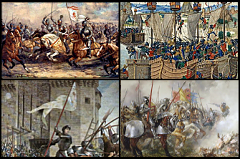
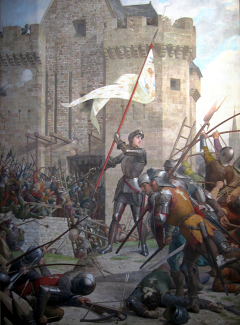
A crossbow bolt struck Joan of Arc between the neck and shoulder as she led an assault on the Tourelles fortification at Orleans on May 7, 1429. She pulled the iron point from her flesh, pressed a cloth to the wound, and returned to the fighting. By nightfall, the English garrison had abandoned the fortification, and the siege that had strangled Orleans for seven months was broken. Joan was seventeen years old. The Siege of Orleans was the critical military engagement of the Hundred Years' War's final phase. England and its Burgundian allies controlled northern France, and the Dauphin Charles, uncrowned heir to the French throne, held only scattered territories south of the Loire. Orleans, positioned on the river's north bank, was the last major obstacle to an English advance into the Dauphin's remaining strongholds. If Orleans fell, France's cause was likely finished. Joan arrived at the besieged city on April 29 after convincing the Dauphin's court at Chinon that God had sent her to save France. She had no military training. She was an illiterate peasant girl from Domremy who claimed to hear the voices of Saints Michael, Catherine, and Margaret. The Dauphin, desperate and politically cornered, gave her armor, a banner, and a small escort. The military situation was less hopeless than legend suggests. English forces numbered only about 5,000 and were spread across a series of fortified positions surrounding the city. French reinforcements and supplies had been arriving before Joan's appearance. What Joan provided was not strategy but something military commanders could not manufacture: moral transformation. The French garrison, which had been passive and demoralized for months, attacked with reckless aggression once she arrived. The assault on the Tourelles on May 7 was the decisive action. French troops stormed the fortified bridgehead from both sides of the river while Joan, visibly wounded and refusing to withdraw, rallied the attack. English commander Sir William Glasdale drowned when the drawbridge collapsed under retreating soldiers. The remaining English positions were abandoned within two days. Orleans was free, and Joan led the Dauphin to his coronation at Reims Cathedral two months later.
May 7, 1429
597 years ago
Key Figures & Places
What Else Happened on May 7
The Roman Caesar didn't realize Antioch's Jews had already been pushed to the edge when he arrived in 351. Constantius Gallus had a reputation—his cousin Julian…
The garrison commander at Diocaesarea didn't wait for permission. When Gallus settled into Antioch's imperial palace in 351, Jewish rebels seized the city's wea…
The dome didn't just crack—it pancaked into the nave, twenty thousand tons of brick and mortar crushing the floor where emperors had stood. A mild earthquake th…
The Second Council of Lyon convened to establish the papal conclave, mandating that cardinals be locked in a room until they elected a new pontiff. This strict …
Cardinal Pierre Roger ascended to the papacy as Clement VI, transforming Avignon into a lavish center of European art and diplomacy. His reign solidified the Av…
The defenders ate cats, then rats, then boiled leather. Málaga held out for four months against Ferdinand and Isabella's artillery—longest siege of the entire R…
Talk to History
Have a conversation with historical figures who witnessed this era. Ask questions, explore perspectives, and bring history to life.