
Beethoven Premieres Ninth Symphony to Standing Ovation
Ludwig van Beethoven sat on stage facing the orchestra, turning pages of a score he could not hear performed. By May 1824, the composer was almost completely deaf, relying on conversation books and vibrations felt through the floor to communicate with the world. When his Ninth Symphony premiered at the Karntnertortheater in Vienna on May 7, contralto Caroline Unger had to turn him around to see the audience's thunderous applause. He had been conducting from memory, several bars behind the actual performance. The symphony had been in development for over a decade. Beethoven had contemplated setting Friedrich Schiller's poem "An die Freude" (Ode to Joy) to music since 1793, and sketches for the choral finale appeared in his notebooks as early as 1812. The complete work took shape between 1822 and 1824, composed during a period of worsening health, financial anxiety, and legal battles over custody of his nephew Karl. The premiere was an organizational nightmare. Michael Umlauf conducted the orchestra while Beethoven set the tempo from beside him, though the musicians had been instructed to ignore the composer and follow Umlauf. The concert also included the overture The Consecration of the House and three movements from the Missa Solemnis. Rehearsal time had been inadequate, and the performers struggled with music that pushed every section of the orchestra beyond existing technical limits. The fourth movement's innovation was radical. No major symphony had ever incorporated vocal soloists and a full chorus. Beethoven's decision to introduce the human voice into the symphonic form, with a baritone soloist singing "O friends, not these tones!" before launching into Schiller's text, broke the boundaries of what a symphony could be. Contemporary critics were divided, but audiences were overwhelmed. The Ninth Symphony's influence extends far beyond concert halls. The "Ode to Joy" melody was adopted as the anthem of the European Union in 1985. Leonard Bernstein conducted it at the Berlin Wall's fall in 1989, substituting "Freiheit" (freedom) for "Freude" (joy). The standard length of a compact disc, 74 minutes, was reportedly chosen to accommodate the Ninth's longest common recording. A deaf man's final symphony became the most universal piece of music ever written.
May 7, 1824
202 years ago
Key Figures & Places

Austria
Wikipedia
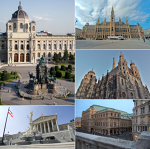
Vienna
Wikipedia
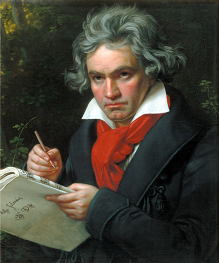
Ludwig van Beethoven
Wikipedia
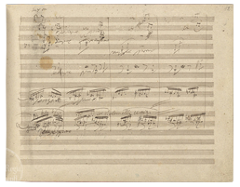
Symphony No. 9 (Beethoven)
Wikipedia
Michael Umlauf
Wikipedia

deaf
Wikipedia
Ludwig van Beethoven
Wikipedia
Symphony No. 9 (Beethoven)
Wikipedia
Vienna
Wikipedia
Michael Umlauf
Wikipedia
Kärntnertortheater
Wikipedia
Henriette Sontag
Wikipedia
Caroline Unger
Wikipedia
Anton Haizinger
Wikipedia
Joseph Seipelt
Wikipedia
First French Empire
Wikipedia
Napoleon
Wikipedia
Pope Pius VII
Wikipedia

Papal States
Wikipedia
What Else Happened on May 7
The Roman Caesar didn't realize Antioch's Jews had already been pushed to the edge when he arrived in 351. Constantius Gallus had a reputation—his cousin Julian…
The garrison commander at Diocaesarea didn't wait for permission. When Gallus settled into Antioch's imperial palace in 351, Jewish rebels seized the city's wea…
The dome didn't just crack—it pancaked into the nave, twenty thousand tons of brick and mortar crushing the floor where emperors had stood. A mild earthquake th…
The Second Council of Lyon convened to establish the papal conclave, mandating that cardinals be locked in a room until they elected a new pontiff. This strict …
Cardinal Pierre Roger ascended to the papacy as Clement VI, transforming Avignon into a lavish center of European art and diplomacy. His reign solidified the Av…
A crossbow bolt struck Joan of Arc between the neck and shoulder as she led an assault on the Tourelles fortification at Orleans on May 7, 1429. She pulled the …
Talk to History
Have a conversation with historical figures who witnessed this era. Ask questions, explore perspectives, and bring history to life.