

Jones Sues Clinton: Harassment Case Reshapes Presidency
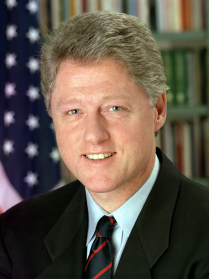
Paula Corbin Jones, a former Arkansas state employee, filed a federal sexual harassment lawsuit against President Bill Clinton on May 6, 1994, alleging that Clinton, while governor of Arkansas, had exposed himself to her in a Little Rock hotel room in May 1991 and requested oral sex. The suit, which Clinton denied and fought for four years, triggered a chain of legal and political consequences that led directly to his impeachment. Jones alleged that an Arkansas state trooper had escorted her from her state job at a conference registration desk to the governor's suite at the Excelsior Hotel on May 8, 1991. Clinton, she claimed, made sexual advances that she rejected before returning to her post. Jones filed the lawsuit on the last day before the three-year statute of limitations expired, seeking $700,000 in damages for sexual harassment and defamation. The case raised an unprecedented constitutional question: could a sitting president be sued in civil court for conduct that occurred before taking office? Clinton's legal team argued for immunity or at least postponement until he left office, claiming that civil litigation would distract the president from his duties. The case reached the Supreme Court, which ruled unanimously in Clinton v. Jones (1997) that a sitting president enjoys no immunity from civil lawsuits for unofficial conduct. The ruling proved consequential beyond anyone's prediction. During the discovery phase of the Jones case, Clinton's attorneys were required to disclose information about other sexual relationships. Kenneth Starr, the independent counsel investigating the Whitewater land deal, expanded his probe to include Clinton's relationship with White House intern Monica Lewinsky after Linda Tripp provided recordings of Lewinsky describing the affair. Clinton settled the Jones lawsuit in November 1998 for $850,000 without admitting wrongdoing, just weeks before the House of Representatives voted to impeach him for perjury and obstruction of justice related to his testimony about Lewinsky. The case demonstrated how civil litigation against a sitting president could metastasize into a constitutional crisis, validating the concerns Clinton's lawyers had raised before the Supreme Court rejected them.
May 6, 1994
32 years ago
Key Figures & Places


What Else Happened on May 6

Charles III, Duke of Bourbon, was killed by an arquebus shot while scaling the walls of Rome at dawn on May 6, 1527. His death should have ended the assault. In…
The Constable of Bourbon died in the first wave, shot off a scaling ladder before his unpaid army even reached Rome's walls. What followed wasn't a battle. For …
Manco Inca brought 100,000 warriors to reclaim Cuzco from roughly 200 Spanish defenders. The numbers weren't even close. But those 200 had horses, steel armor, …
The problem wasn't that most English people couldn't read Latin. It's that their priests couldn't either. Henry VIII's 1536 order for English Bibles in every ch…
For the first time, an English farmer could walk into his parish church and read God's words in his own language. Henry VIII—the same king who'd broken with Rom…
Francis Xavier arrived in Old Goa to begin a decade of Jesuit missionary work across Asia. His presence transformed the region into the administrative heart of …
Talk to History
Have a conversation with historical figures who witnessed this era. Ask questions, explore perspectives, and bring history to life.