
Eiffel Tower Opens: Paris Unveils Its Iron Giant
Gustave Eiffel climbed 1,710 steps to plant the French tricolor at the summit of his iron tower on March 31, 1889. The public had to wait until May 6, when the Exposition Universelle officially opened and visitors were first permitted to ascend the structure that half of Paris's cultural establishment had condemned as a monstrosity. Over two million people rode the elevators during the six-month fair, and the tower that artists had called a disgrace became the most visited monument on Earth. The tower was conceived as a temporary entrance arch for the 1889 World's Fair, celebrating the centennial of the French Revolution. Eiffel's firm won the design competition against 107 other proposals, and construction began in January 1887. The project required 18,038 individual iron pieces, 2.5 million rivets, and a workforce of 300 laborers on site who assembled the prefabricated components with extraordinary precision. Opposition was fierce and public. A petition signed by Guy de Maupassant, Alexandre Dumas fils, Charles Garnier, and other prominent figures called the tower "a gigantic black factory smokestack" that would disfigure the Paris skyline. Maupassant reportedly ate lunch in the tower's restaurant because it was the only place in Paris from which he could not see it. The engineering was revolutionary. At 984 feet, the tower was nearly double the height of the Washington Monument, then the world's tallest structure. Eiffel's team used wind-tunnel data and mathematical models to design the curved iron lattice that distributed wind loads efficiently across the four legs. The tower's sway in high winds never exceeds 4.75 inches, a remarkable achievement for a structure built without computers or modern materials science. The planned twenty-year permit would have required demolition in 1909, but the tower's value as a radio transmission platform saved it. Military wireless signals broadcast from the summit during World War I proved the structure's strategic worth. The Eiffel Tower has since welcomed over 300 million visitors, undergone multiple renovations and repainting cycles, and remains the most recognizable architectural silhouette in the world.
May 6, 1889
137 years ago
Key Figures & Places
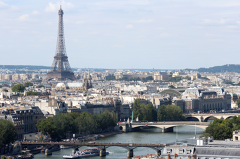
Paris
Wikipedia
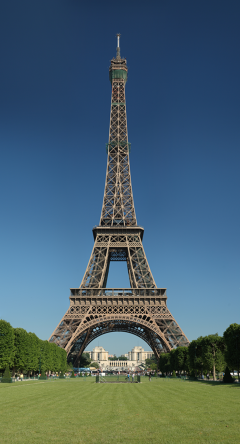
Eiffel Tower
Wikipedia
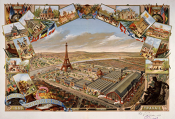
Exposition Universelle (1889)
Wikipedia
Eiffel Tower
Wikipedia
Exposition Universelle (1889)
Wikipedia
Geschichte von Paris
Wikipedia
World's fair
Wikipedia
Champ de Mars
Wikipedia
Jardins du Trocadéro
Wikipedia
Muelle de Orsay
Wikipedia
Río Sena
Wikipedia
Maschinenhalle Paris
Wikipedia
What Else Happened on May 6
Charles III, Duke of Bourbon, was killed by an arquebus shot while scaling the walls of Rome at dawn on May 6, 1527. His death should have ended the assault. In…
The Constable of Bourbon died in the first wave, shot off a scaling ladder before his unpaid army even reached Rome's walls. What followed wasn't a battle. For …
Manco Inca brought 100,000 warriors to reclaim Cuzco from roughly 200 Spanish defenders. The numbers weren't even close. But those 200 had horses, steel armor, …
The problem wasn't that most English people couldn't read Latin. It's that their priests couldn't either. Henry VIII's 1536 order for English Bibles in every ch…
For the first time, an English farmer could walk into his parish church and read God's words in his own language. Henry VIII—the same king who'd broken with Rom…
Francis Xavier arrived in Old Goa to begin a decade of Jesuit missionary work across Asia. His presence transformed the region into the administrative heart of …
Talk to History
Have a conversation with historical figures who witnessed this era. Ask questions, explore perspectives, and bring history to life.