Easter Rising Ends: Ireland's Rebellion Ignites Independence
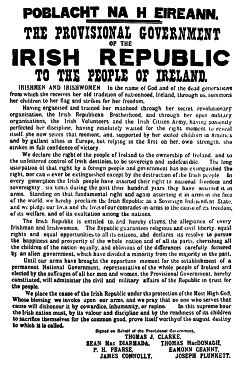
Patrick Pearse walked out of a shattered building on Moore Street in Dublin on April 29, 1916, carrying a white flag and a letter of unconditional surrender that ended the Easter Rising after six days of fighting. The rebellion had failed by every military measure. Most of central Dublin was in ruins, shelled by British artillery and a gunboat on the River Liffey. The rebel garrisons, cut off from each other and running out of ammunition and food, could not have held out another day. Pearse surrendered to save civilian lives, which were being lost at a rate far exceeding combatant casualties on either side. The final toll was devastating for a conflict that lasted less than a week. At least 485 people died: 260 civilians, 143 British soldiers, and 82 rebels. Over 2,600 were wounded. The civilian dead included men, women, and children caught in crossfire, killed by stray shells, or shot by nervous soldiers who could not distinguish combatants from bystanders in the urban chaos. The material destruction was concentrated along O'Connell Street and in the neighborhoods around the rebel strongholds, but the economic damage spread across the entire city. British authorities compounded their military victory with a political catastrophe. General Sir John Maxwell, given emergency powers as military governor, ordered summary court-martials for the rebel leaders. Between May 3 and May 12, sixteen men were executed by firing squad at Kilmainham Gaol, including all seven signatories of the Proclamation of the Republic. The executions were conducted in secrecy, in small batches, over ten excruciating days, creating a drip-feed of martyrdom that turned Irish public opinion decisively against British rule. James Connolly, too badly wounded to stand, was executed strapped to a chair. The transformation of public sentiment was remarkable in its speed. Dubliners who had jeered the rebels as they were marched to prison after the surrender were mourning them as heroes within weeks. Sinn Fein, which had no connection to the Rising but was blamed for it by the British press, won a landslide victory in the 1918 general election. The Irish War of Independence began in January 1919. By 1922, the Irish Free State was established. Pearse and his comrades had calculated that their deaths would achieve what their arms could not, and they were right.
April 29, 1916
110 years ago
Key Figures & Places

What Else Happened on April 29
A single mountain of rock in North Africa swallowed an army and spat them out into Europe. Tariq ibn-Ziyad didn't just land; he burned his own ships to ensure h…
The basilica of San Paolo Fuori le Mura cracked open while Rome slept in 801, shaking the Central Apennines hard enough to rattle Spoleto too. It wasn't just st…
Byzantine Emperor Alexius I crushed the Pecheneg army at the Battle of Levounion, ending their threat to Constantinople. By annihilating the nomadic force with …
A Lithuanian cavalry charge at the Vikhra River crushed Smolensk's hopes in minutes. Prince Vasily's army, outnumbered and outmaneuvered by Algirdas's son, didn…
Joan of Arc rode into Orleans on the evening of April 29, 1429, and a city that had been under English siege for six months erupted in hope. The 17-year-old pea…
A seventeen-year-old girl in a white suit walked into a starving city where the French army had been too terrified to move for months. She didn't just talk; she…
Talk to History
Have a conversation with historical figures who witnessed this era. Ask questions, explore perspectives, and bring history to life.