Kon-Tiki Sets Sail: Proving Ancient Oceanic Migration
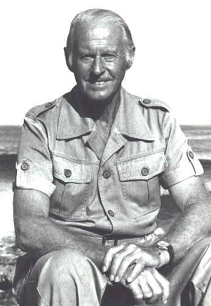
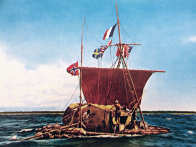
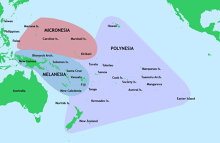
Thor Heyerdahl and five crewmates departed Callao, Peru, on April 28, 1947, aboard a balsa wood raft named Kon-Tiki, setting out to prove that ancient South Americans could have colonized Polynesia by drifting across the Pacific on the Humboldt Current. The raft was constructed using pre-Columbian techniques: nine balsa logs lashed together with hemp rope, a bamboo cabin, and a square sail. No nails, bolts, or modern materials were used. Most experts expected the raft to disintegrate within weeks. It held together for 101 days and 4,300 miles. Heyerdahl's theory was straightforward and controversial. He noted cultural similarities between South American and Polynesian civilizations, particularly in agricultural practices, stone carving, and legends, and proposed that pre-Columbian Peruvians had sailed westward to settle the Pacific islands. The academic establishment rejected the idea almost unanimously, pointing to linguistic, genetic, and archaeological evidence that Polynesians descended from Southeast Asian populations who migrated eastward. Heyerdahl's response was to build a raft and make the voyage himself, arguing that possibility was the first step toward proof. The journey was harrowing. The crew navigated using the stars and the currents, encountering storms, sharks, and the vast emptiness of the open Pacific. They fished for food, collected rainwater, and discovered that the balsa logs, far from waterlogging and sinking as critics predicted, actually absorbed water in a way that increased the raft's stability. On August 7, 1947, the Kon-Tiki crashed into the reef at Raroia Atoll in the Tuamotu Islands of French Polynesia. All six men survived. Heyerdahl's book about the voyage became an international bestseller, and his documentary film won the Academy Award in 1951. The expedition proved that the voyage was physically possible but did not prove it had actually happened. Modern DNA analysis has largely confirmed the Southeast Asian origin of Polynesian peoples, though a 2020 study did find traces of South American ancestry in some Polynesian populations dating to around 1200 AD, suggesting that some form of transoceanic contact may have occurred. Heyerdahl's theory was mostly wrong, but his voyage demonstrated something valuable about human capability and the willingness to test ideas by living them rather than merely arguing about them.
April 28, 1947
79 years ago
Key Figures & Places

What Else Happened on April 28
Ardashir didn't just win; he crushed Artabanus V beneath the hooves of his own cavalry near Hormozdgan in 224. The Parthian king, once the master of a vast real…
He marched in wearing purple, but his boots were stained with the mud of a three-day massacre where 20,000 soldiers fell. The city he entered was silent; the cr…
Just two days after Tyre's crowd cheered him King, Conrad of Montferrat died in a narrow street by an assassin's blade. The Hashshashin struck while he walked f…
Nichiren, a Buddhist monk from eastern Japan, chanted "Nam Myoho Renge Kyo" for the first time on April 28, 1253, at Seicho-ji temple in Awa Province, declaring…
Temür Khan secured the Mongol throne following a grand kurultai, consolidating power as the grandson of Kublai. His ascension stabilized the Yuan dynasty’s admi…
Spanish forces decimated the French army at the Battle of Cerignola by anchoring their defense behind a fortified ditch and unleashing a devastating volley of a…
Talk to History
Have a conversation with historical figures who witnessed this era. Ask questions, explore perspectives, and bring history to life.