Mussolini Hanged: Fascism's Bloody End in Italy
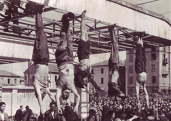
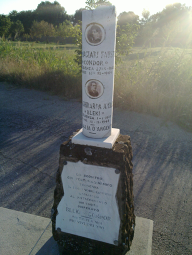
Walter Audisio, a Communist partisan using the code name Colonnello Valerio, executed Benito Mussolini and Clara Petacci by firing squad on the afternoon of April 28, 1945, against the wall of a villa at Giulino di Mezzegra on Lake Como. The executions were summary, authorized by the National Liberation Committee but carried out without trial, hearing, or formal charges. The bodies were transported to Milan, where they were hung upside down from the girders of an Esso gas station in Piazzale Loreto, the same square where the Germans had displayed the bodies of fifteen executed partisans the previous August. The scene at Piazzale Loreto was medieval in its savagery. A crowd of thousands gathered to view the corpses, kicking and spitting on them. Women fired pistols into Mussolini's body. Petacci's corpse was subjected to particular abuse. Photographs of the inverted bodies, distributed worldwide within days, became among the most disturbing images of World War II. The display was both a catharsis for a population that had suffered under fascism and foreign occupation, and a deliberate political message: this is what happens to dictators. The decision to execute Mussolini rather than hand him to the Allies was driven by Communist partisan leadership, particularly Luigi Longo, who feared that the British or Americans would protect Mussolini for political purposes. The Allies had already shown leniency toward King Victor Emmanuel III and Marshal Pietro Badoglio, both of whom had supported the fascist regime for years before switching sides. The Communists calculated, correctly, that a dead Mussolini could not be rehabilitated, and that the manner of his death would be a lasting deterrent. Mussolini's fall was total in a way few dictators have experienced. He had ruled Italy for twenty-one years, waged aggressive wars in Ethiopia, Spain, Albania, and across North Africa and Europe, allied with Hitler, implemented racial laws against Italian Jews, and reduced Italy from a European power to a devastated, divided country. His body, eventually buried in an unmarked grave by the government, was stolen by neo-fascists in 1946 and hidden for four months before being recovered. He was finally interred in his family tomb in Predappio in 1957, where the grave remains a pilgrimage site for far-right sympathizers.
April 28, 1945
81 years ago
Key Figures & Places
What Else Happened on April 28
Ardashir didn't just win; he crushed Artabanus V beneath the hooves of his own cavalry near Hormozdgan in 224. The Parthian king, once the master of a vast real…
He marched in wearing purple, but his boots were stained with the mud of a three-day massacre where 20,000 soldiers fell. The city he entered was silent; the cr…
Just two days after Tyre's crowd cheered him King, Conrad of Montferrat died in a narrow street by an assassin's blade. The Hashshashin struck while he walked f…
Nichiren, a Buddhist monk from eastern Japan, chanted "Nam Myoho Renge Kyo" for the first time on April 28, 1253, at Seicho-ji temple in Awa Province, declaring…
Temür Khan secured the Mongol throne following a grand kurultai, consolidating power as the grandson of Kublai. His ascension stabilized the Yuan dynasty’s admi…
Spanish forces decimated the French army at the Battle of Cerignola by anchoring their defense behind a fortified ditch and unleashing a devastating volley of a…
Talk to History
Have a conversation with historical figures who witnessed this era. Ask questions, explore perspectives, and bring history to life.