
Mutiny on the Bounty: Bligh Cast Adrift Into History
Fletcher Christian pressed a cutlass to Captain William Bligh's throat before dawn on April 28, 1789, and the most famous mutiny in naval history was underway. Christian and eighteen loyal crewmen seized HMS Bounty in the South Pacific, setting Bligh and eighteen men adrift in a 23-foot open launch with minimal provisions, a compass, a quadrant, and no charts. The mutineers expected Bligh to die. Instead, he navigated 3,618 nautical miles across open ocean to Timor in 47 days, one of the most extraordinary feats of seamanship ever recorded. The mutiny's causes have been debated for over two centuries, with popular culture consistently casting Bligh as a brutal tyrant. The historical record is more complicated. Bligh was demanding, verbally abusive, and prone to public humiliation of his officers, but he was not unusually harsh by the standards of the Royal Navy. He never ordered a flogging aboard the Bounty that exceeded the norms of the service. The more likely catalyst was the five months the crew had spent in Tahiti, where they had formed relationships with Tahitian women, lived in relative comfort, and been freed from naval discipline. Christian, who had taken a Tahitian partner named Mauatua, reportedly told Bligh during the mutiny, "I am in hell." The aftermath played out across the Pacific. Bligh reached England and was acquitted of losing his ship. Christian and eight mutineers, along with six Tahitian men and twelve Tahitian women, settled on Pitcairn Island, an uninhabited volcanic rock so remote it did not appear on most charts. The settlement descended into violence, alcoholism, and murder. By 1800, only one mutineer, John Adams, remained alive among the men. An American ship discovered the community in 1808, finding Adams living with the Tahitian women and their mixed-heritage children in what he described as a peaceful Christian community. The Bounty mutiny became one of the most retold stories in English literature, inspiring dozens of books and five major films. Its enduring fascination lies not in the mutiny itself, which was a brief, messy affair, but in the questions it raises about authority, freedom, and the choices people make when civilization's constraints are removed. Pitcairn Island remains inhabited by descendants of the mutineers and their Tahitian partners, the smallest and most isolated population of any jurisdiction on Earth.
April 28, 1789
237 years ago
Key Figures & Places

Pitcairn Island
Wikipedia
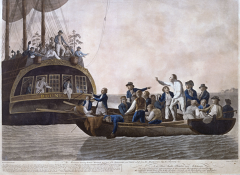
Mutiny on the Bounty
Wikipedia
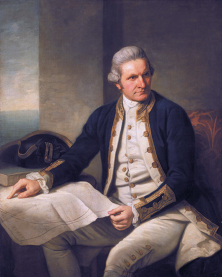
Captain (Royal Navy)
Wikipedia
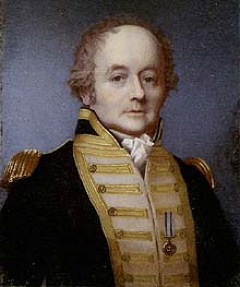
William Bligh
Wikipedia
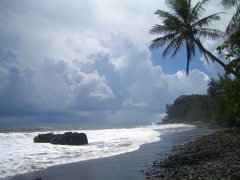
Tahiti
Wikipedia
Mutiny on the Bounty
Wikipedia
William Bligh
Wikipedia
Tahiti
Wikipedia
Pitcairn Island
Wikipedia
Fletcher Christian
Wikipedia
Gehorsamsverweigerung
Wikipedia
HMS Bounty
Wikipedia
Kupang
Wikipedia
Tonga
Wikipedia
Pitcairn Islands
Wikipedia
What Else Happened on April 28
Ardashir didn't just win; he crushed Artabanus V beneath the hooves of his own cavalry near Hormozdgan in 224. The Parthian king, once the master of a vast real…
He marched in wearing purple, but his boots were stained with the mud of a three-day massacre where 20,000 soldiers fell. The city he entered was silent; the cr…
Just two days after Tyre's crowd cheered him King, Conrad of Montferrat died in a narrow street by an assassin's blade. The Hashshashin struck while he walked f…
Nichiren, a Buddhist monk from eastern Japan, chanted "Nam Myoho Renge Kyo" for the first time on April 28, 1253, at Seicho-ji temple in Awa Province, declaring…
Temür Khan secured the Mongol throne following a grand kurultai, consolidating power as the grandson of Kublai. His ascension stabilized the Yuan dynasty’s admi…
Spanish forces decimated the French army at the Battle of Cerignola by anchoring their defense behind a fortified ditch and unleashing a devastating volley of a…
Talk to History
Have a conversation with historical figures who witnessed this era. Ask questions, explore perspectives, and bring history to life.