

Gallipoli Invasion Begins: ANZAC Forces Storm Turkish Shores
Allied forces waded ashore at Gallipoli on April 25, 1915, attempting to knock the Ottoman Empire out of World War I by seizing the Dardanelles strait and opening a supply route to Russia. The campaign was Winston Churchill's brainchild, conceived as an alternative to the deadlocked Western Front, and it began with near-total failure. Australian and New Zealand troops, the ANZACs, landed at the wrong beach on the Aegean coast, facing cliffs instead of the expected gentle slopes, while British and French forces at Cape Helles met devastating fire that pinned them to the shoreline. The strategic logic was sound on paper. Control of the Dardanelles would connect the Western Allies with Russia, allow the transfer of munitions and supplies, and potentially force the Ottoman Empire to sue for peace. A successful campaign might also bring wavering Balkan states into the war on the Allied side. But the execution was catastrophic. Naval attempts to force the strait in March had already failed when mines sank three battleships. The decision to land ground forces was a fallback that sacrificed tactical surprise for an assault on prepared positions. Ottoman defenders, commanded by the German general Liman von Sanders with Mustafa Kemal leading the critical 19th Division at Anzac Cove, fought with a tenacity that Allied planners had not anticipated. Kemal's legendary order to his troops, "I don't order you to attack, I order you to die," reflected the desperation of a defense that held by the narrowest of margins. The campaign devolved into trench warfare on cliff faces, with both sides suffering catastrophic casualties from combat, disease, and the brutal conditions of the Gallipoli peninsula. The Allies evacuated between December 1915 and January 1916, the only phase of the campaign executed with skill. Total Allied casualties exceeded 250,000; Ottoman losses were comparable. Churchill's political career was shattered for a decade. For Australia and New Zealand, Gallipoli became a national founding myth, the crucible in which colonial subjects forged distinct national identities through shared sacrifice. April 25, ANZAC Day, is the most solemn date on both nations' calendars. For Turkey, the defense of Gallipoli was the making of Mustafa Kemal, who would go on to found the Turkish Republic.
April 25, 1915
111 years ago
Key Figures & Places
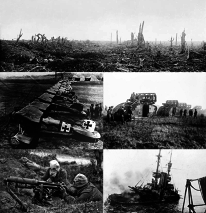
World War I
Wikipedia
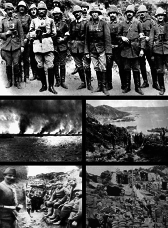
Battle of Gallipoli
Wikipedia
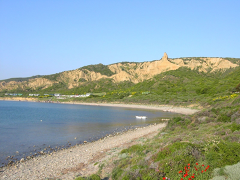
Landing at Anzac Cove
Wikipedia
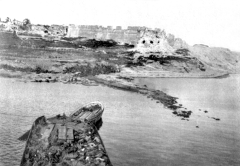
Landing at Cape Helles
Wikipedia

World War I
Wikipedia

Gallipoli campaign
Wikipedia

Landing at Anzac Cove
Wikipedia

Landing at Cape Helles
Wikipedia

Cabo Helles
Wikipedia

Triple Entente
Wikipedia

Dardanelles
Wikipedia
What Else Happened on April 25

Athens starved. After Lysander's Spartan fleet annihilated the Athenian navy at Aegospotami in 405 BC, capturing 170 of 180 warships and executing 3,000 prisone…
Rats were eating the last of Athens' grain when Sparta's fleet finally sealed the harbor in 404 BC. Admiral Lysander watched as King Pausanias tightened the noo…
Seven thousand Armenian nobles lay dead in the snow at Bagrevand on April 24, 775. The Armenian nakharar families had risen against the Abbasid Caliphate's incr…
Bloodied and blind, Pope Leo III scrambled out of Rome's streets in 799. Roman mobs had gouged his eyes and slashed his tongue, leaving him broken before he rea…
A bishop's decree turned a muddy riverbank into a spiritual capital. King Ladislaus didn't just sign the Felician Charter; he carved out the Zagreb Bishopric, p…
The Dutch fleet decimated the anchored Spanish navy at the Battle of Gibraltar, neutralizing Spain’s maritime dominance in the region. This decisive victory cri…
Talk to History
Have a conversation with historical figures who witnessed this era. Ask questions, explore perspectives, and bring history to life.