Sparta Defeats Athens: The Peloponnesian War Ends
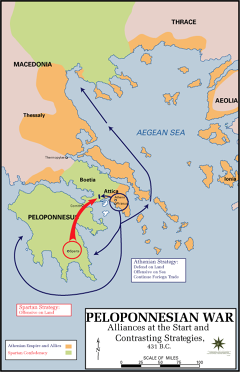
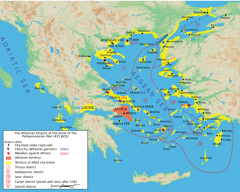
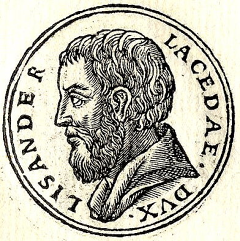
Athens starved. After Lysander's Spartan fleet annihilated the Athenian navy at Aegospotami in 405 BC, capturing 170 of 180 warships and executing 3,000 prisoners, the grain supply from the Black Sea was severed. The city that had dominated the Aegean for seven decades was blockaded by land and sea through the winter of 405-404 BC, its population swelling with refugees and dwindling in food. By April 404 BC, Athens surrendered unconditionally, ending the Peloponnesian War after 27 years of conflict that had devastated the Greek world. The terms were harsh but not annihilating. Sparta's allies, particularly Corinth and Thebes, demanded that Athens be razed and its population enslaved, the same fate Athens had inflicted on Melos in 416 BC. Lysander refused, reportedly arguing that Greece should not destroy "one of her two eyes." Athens was forced to demolish its Long Walls connecting the city to its port at Piraeus, surrender its remaining fleet except for twelve ships, recall its political exiles, and accept an oligarchic government aligned with Spartan interests. The walls came down to the music of flute girls, and Spartans celebrated the date as the beginning of Greek freedom. The war's causes were structural. Athens's Delian League, originally a defensive alliance against Persia, had evolved into an empire that extracted tribute from allied cities and punished dissent with military force. Sparta, leading the Peloponnesian League, represented the opposing principle of autonomous city-states resisting Athenian domination. Thucydides, the war's great historian and himself an Athenian general, identified the fundamental cause as Spartan fear of growing Athenian power, a dynamic that political scientists now call the "Thucydides Trap." Sparta's victory proved hollow. Within thirty years, Thebes had shattered Spartan military supremacy at Leuctra, and within seventy years, Philip II of Macedon had subjugated all of Greece. The Peloponnesian War exhausted the Greek city-state system so thoroughly that none of its participants recovered fully. Athens rebuilt its democracy and its walls within a decade, but it never regained the imperial power that had made it the cultural and political center of the Greek world. The golden age was over.
April 25, 404 BC
Key Figures & Places
What Else Happened on April 25
Rats were eating the last of Athens' grain when Sparta's fleet finally sealed the harbor in 404 BC. Admiral Lysander watched as King Pausanias tightened the noo…
Seven thousand Armenian nobles lay dead in the snow at Bagrevand on April 24, 775. The Armenian nakharar families had risen against the Abbasid Caliphate's incr…
Bloodied and blind, Pope Leo III scrambled out of Rome's streets in 799. Roman mobs had gouged his eyes and slashed his tongue, leaving him broken before he rea…
A bishop's decree turned a muddy riverbank into a spiritual capital. King Ladislaus didn't just sign the Felician Charter; he carved out the Zagreb Bishopric, p…
The Dutch fleet decimated the anchored Spanish navy at the Battle of Gibraltar, neutralizing Spain’s maritime dominance in the region. This decisive victory cri…
He climbed Coal Hill and tied his silk sash to an ancient locust tree. Chongzhen, the last Ming emperor, chose death over surrender as Li Zicheng's rebels breac…
Talk to History
Have a conversation with historical figures who witnessed this era. Ask questions, explore perspectives, and bring history to life.