
Zoetrope Patented: The Birth of Animated Pictures
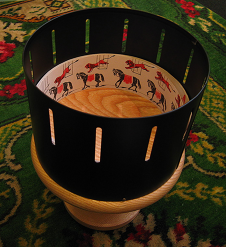
A spinning drum with slits in its sides made still images appear to move, and the modern entertainment industry has been chasing that illusion ever since. William Lincoln received a US patent for the zoetrope on April 23, 1867, improving upon a device first described by British mathematician William George Horner in 1834. The principle was simple: a sequence of slightly different drawings placed inside a revolving cylinder could, when viewed through narrow slits, create the convincing illusion of continuous motion. The eye retained each image just long enough for the next to replace it seamlessly. Horner had called his version the daedaleum, but the device attracted little commercial interest until Lincoln redesigned it for mass production. Milton Bradley, the game manufacturer, began selling Lincoln's zoetrope in the United States in 1867, marketing it as a parlor toy. At prices accessible to middle-class families, the zoetrope became one of the most popular optical toys of the Victorian era, joining a growing family of devices, including the thaumatrope, phenakistoscope, and praxinoscope, that exploited persistence of vision for entertainment. The science behind the zoetrope is the same phenomenon that makes cinema and television possible. The human visual system processes a rapid succession of still images as continuous motion when those images change faster than approximately 10-12 frames per second. Film projectors typically run at 24 frames per second, and modern displays at 60 or more. Every screen you have ever watched, from a nickelodeon to an IMAX theater to the phone in your pocket, relies on the same perceptual quirk that made Horner's drum spin to life. The zoetrope also represented a democratization of animation. Unlike earlier devices that could only be viewed by one person at a time, the zoetrope allowed a group to watch simultaneously. Lincoln's patent laid no claim to the optical principle itself, only to the specific mechanical design, which meant that the technology spread rapidly and inspired further innovation. Within three decades, Thomas Edison and the Lumiere brothers would replace spinning drums with flexible film stock, but the fundamental trick remained identical.
April 23, 1867
159 years ago
Key Figures & Places
What Else Happened on April 23
They built a shrine to a goddess of desire right after losing an army. In 215 BC, panic drove Rome's leaders to dedicate Venus Erycina on the Capitoline Hill fo…
A queen falls, not in battle's heat, but to a sack that turns stone to dust. In 599, Uneh Chan of Calakmul crushed Palenque's defenses, killing Queen Yohl Ik'na…
A seven-year-old boy in a wool tunic stood under a canopy while nobles held their breath. Dagobert III didn't rule; his father, Pepin II, did everything behind …
Dagobert III ascended to the Frankish throne following the death of his father, Childebert III. His reign deepened the decline of Merovingian authority, as the …
Brian Boru, the aging High King of Ireland, shattered Norse-Dublin power at Clontarf on April 23, 1014, in one of the bloodiest battles fought on Irish soil. An…
Brian Boru's army smashed the Viking line at Clontarf, yet the High King died under his own tent while celebrating victory. Three thousand men fell that April d…
Talk to History
Have a conversation with historical figures who witnessed this era. Ask questions, explore perspectives, and bring history to life.