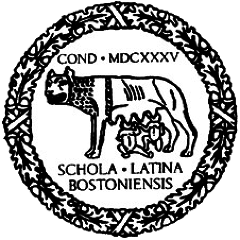
Boston Latin School Founded: America's First Public School
Five years before Harvard opened its doors, Boston already had a school. Boston Latin School, founded on April 23, 1635, is the oldest public school in America, established by Puritan settlers who believed that an educated citizenry was essential to both religious devotion and self-governance. The school's original purpose was to prepare boys for university study, primarily at the college that would soon be founded in Cambridge, and its curriculum was relentlessly classical: Latin, Greek, rhetoric, and logic. The founders' priorities were transparent. Massachusetts Bay Colony had been settled largely by university-educated men, many of them Cambridge graduates, who feared that their children would grow up illiterate in the wilderness. The 1647 Massachusetts law known as the Old Deluder Satan Act, which required every town of fifty or more families to maintain a school, codified the same anxiety. Boston Latin was the first institutional expression of a principle that would become foundational to American democracy: that public education is a public responsibility. The school's alumni list reads like a roll call of American history. Benjamin Franklin attended briefly before dropping out. Samuel Adams, John Hancock, and Robert Treat Paine, three of the four Massachusetts signers of the Declaration of Independence, were graduates. So were Cotton Mather, Ralph Waldo Emerson, George Santayana, and Leonard Bernstein. The school's tradition of producing public leaders is not coincidental. Its classical curriculum was explicitly designed to create citizens capable of argument, persuasion, and governance. Boston Latin still operates today, a selective public exam school at 78 Avenue Louis Pasteur in Boston, making it the oldest continuously operating school in the United States. Its curriculum has evolved far beyond Latin and Greek, but the competitive entrance exam and rigorous academic standards preserve something of the founders' original intent. Nearly four centuries after its founding, the school remains a functioning link between Puritan New England and modern American education.
April 23, 1635
391 years ago
Key Figures & Places
What Else Happened on April 23
They built a shrine to a goddess of desire right after losing an army. In 215 BC, panic drove Rome's leaders to dedicate Venus Erycina on the Capitoline Hill fo…
A queen falls, not in battle's heat, but to a sack that turns stone to dust. In 599, Uneh Chan of Calakmul crushed Palenque's defenses, killing Queen Yohl Ik'na…
A seven-year-old boy in a wool tunic stood under a canopy while nobles held their breath. Dagobert III didn't rule; his father, Pepin II, did everything behind …
Dagobert III ascended to the Frankish throne following the death of his father, Childebert III. His reign deepened the decline of Merovingian authority, as the …
Brian Boru, the aging High King of Ireland, shattered Norse-Dublin power at Clontarf on April 23, 1014, in one of the bloodiest battles fought on Irish soil. An…
Brian Boru's army smashed the Viking line at Clontarf, yet the High King died under his own tent while celebrating victory. Three thousand men fell that April d…
Talk to History
Have a conversation with historical figures who witnessed this era. Ask questions, explore perspectives, and bring history to life.