

Earth Day Born: The Environmental Movement Takes Root
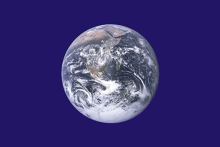
Twenty million Americans walked out of their homes, schools, and offices on April 22, 1970, for the first Earth Day, an event that transformed environmentalism from a fringe concern into a mainstream political force. Senator Gaylord Nelson of Wisconsin conceived the idea after witnessing the devastation of a massive oil spill off Santa Barbara, California, in January 1969. Inspired by the energy of anti-war teach-ins, Nelson proposed a national day of environmental education and was stunned by the response. The environmental conditions of 1970 made the case more eloquently than any speech. The Cuyahoga River in Cleveland had caught fire in June 1969, a spectacle so absurd it became a symbol of industrial negligence. Smog choked major cities. Lake Erie was declared biologically dead. DDT was decimating bird populations. Raw sewage flowed into rivers that supplied drinking water. Americans could see and smell the damage, and a generation raised on images of Earth from space was developing a new awareness of the planet's fragility. Earth Day events ranged from campus teach-ins and park cleanups to mass demonstrations in New York, Philadelphia, and Chicago. Denis Hayes, a 25-year-old Harvard Law student hired by Nelson to coordinate the effort, organized events at thousands of colleges and elementary schools. The diversity of participants, including Republicans and Democrats, students and housewives, labor unions and garden clubs, demonstrated that environmental concern cut across the usual political divides. President Nixon, despite his general indifference to the issue, recognized the political potency and went along. The legislative results were extraordinary. Within three years of Earth Day, Congress passed the Clean Air Act, the Clean Water Act, and the Endangered Species Act, and created the Environmental Protection Agency. No single day of civic action in American history has produced more consequential legislation. Earth Day became an annual global event, observed in over 190 countries, but its greatest legacy is the regulatory framework it catalyzed in those first feverish years.
April 22, 1970
56 years ago
Key Figures & Places
What Else Happened on April 22
The Senate just outlawed a man named Maximinus Thrax for ordering mass executions in Rome itself. Then, terrified and desperate, they shoved two old senators, P…

Thirteen ships bound for India stumbled onto a continent. On April 22, 1500, Pedro Alvares Cabral's Portuguese fleet sighted the coast of present-day Bahia, Bra…
They didn't find gold, but 400 acres of red wood. Pedro Álvares Cabral's fleet arrived in April 1500 with 1,200 men and a ship full of sailors who'd never seen …

England's new king was seventeen, athletic, learned, and brimming with confidence that bordered on arrogance. Henry VIII ascended to the throne on April 22, 150…
Hernán Cortés founded Villa Rica de la Vera Cruz, establishing the first Spanish municipality on the Mexican mainland. By creating this legal entity, he bypasse…
They sold the Moluccas for 350,000 ducats to fix a map error. Portugal got the spice islands; Spain got nothing but a line drawn through empty ocean. Two kings …
Talk to History
Have a conversation with historical figures who witnessed this era. Ask questions, explore perspectives, and bring history to life.