Cabral Sights Brazil: Portuguese Colonization Begins
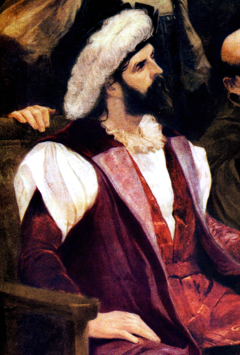
Thirteen ships bound for India stumbled onto a continent. On April 22, 1500, Pedro Alvares Cabral's Portuguese fleet sighted the coast of present-day Bahia, Brazil, after sailing far west across the Atlantic on a route pioneered by Vasco da Gama two years earlier. Whether the landing was accidental, driven by winds and currents, or a deliberate detour based on intelligence that land lay to the west remains debated by historians. Either way, Cabral claimed the territory for the Portuguese crown and named it Ilha de Vera Cruz, the Island of the True Cross. Cabral spent just ten days on the Brazilian coast before continuing to India, his primary mission. He dispatched a supply ship back to Lisbon carrying a letter from the scribe Pero Vaz de Caminha describing the new land, its indigenous Tupiniquim people, and its lush vegetation. Caminha's letter, often called Brazil's birth certificate, is remarkably detailed and notably free of the hostility that characterized many European first-contact accounts. He described the Tupiniquim as healthy, attractive, and innocent, a portrayal that fed European fantasies about noble savages but bore little resemblance to the brutal colonization that followed. Portugal initially showed modest interest in Brazil, focusing its imperial ambitions on the lucrative spice trade with Asia. That changed when explorers discovered brazilwood, a tree yielding valuable red dye, along the coast. By the 1530s, the Portuguese crown began establishing permanent settlements and sugar plantations, creating an economy built on enslaved Indigenous and African labor that would define Brazil for centuries. Cabral's landing set in motion the creation of the largest country in South America and the only Portuguese-speaking nation in the Americas. Brazil's population of 215 million, its cultural blend of Indigenous, African, and European traditions, and its position as one of the world's major economies all trace back to those ten days on a Bahian beach in 1500.
April 22, 1500
526 years ago
Key Figures & Places
What Else Happened on April 22
The Senate just outlawed a man named Maximinus Thrax for ordering mass executions in Rome itself. Then, terrified and desperate, they shoved two old senators, P…
They didn't find gold, but 400 acres of red wood. Pedro Álvares Cabral's fleet arrived in April 1500 with 1,200 men and a ship full of sailors who'd never seen …
England's new king was seventeen, athletic, learned, and brimming with confidence that bordered on arrogance. Henry VIII ascended to the throne on April 22, 150…
Hernán Cortés founded Villa Rica de la Vera Cruz, establishing the first Spanish municipality on the Mexican mainland. By creating this legal entity, he bypasse…
They sold the Moluccas for 350,000 ducats to fix a map error. Portugal got the spice islands; Spain got nothing but a line drawn through empty ocean. Two kings …
English and Persian forces seized the strategic fortress of Ormuz, shattering a century of Portuguese dominance over Persian Gulf trade routes. This victory gra…
Talk to History
Have a conversation with historical figures who witnessed this era. Ask questions, explore perspectives, and bring history to life.