In God We Trust: A Nation's Motto Stamped on Coinage
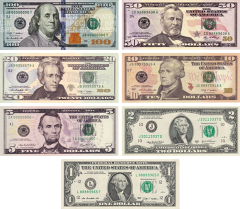
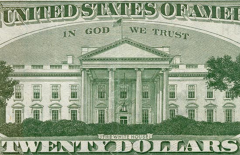
Four words stamped onto a two-cent coin in 1864 became the unofficial creed of a nation at war with itself. On April 22, Congress passed the Coinage Act of 1864, which mandated that "In God We Trust" appear on American coins for the first time. The phrase had debuted two years earlier on the two-cent piece, but the 1864 act made its use standard across the currency system. A country tearing itself apart over slavery reached for divine endorsement. The push for religious language on currency came from an unlikely source: a Pennsylvania minister named Mark R. Watkinson, who wrote to Treasury Secretary Salmon P. Chase in November 1861 arguing that American coinage should "relieve us from the ignominy of heathenism." Chase, a devout Episcopalian with presidential ambitions, agreed and directed Mint Director James Pollock to develop suitable designs. Several versions were tested, including "God Our Trust" and "God and Our Country," before the current phrasing was selected. The timing was no coincidence. The Civil War had produced a surge of religious fervor in both the Union and the Confederacy, each side claiming God's favor. For the Union, stamping a religious motto on currency served a dual purpose: it bolstered morale among northern Christians and implicitly cast the war as a holy cause. Critics, including some clergy, argued that placing God's name on money was borderline blasphemous, but their objections gained little traction in wartime Washington. "In God We Trust" appeared intermittently on various denominations until 1938, when it became mandatory on all coins. In 1956, at the height of Cold War anxiety over atheistic communism, Congress adopted it as the official national motto, replacing the informal "E Pluribus Unum." Legal challenges on First Amendment grounds have been consistently rejected by federal courts, which classify the phrase as "ceremonial deism" rather than a government endorsement of religion.
April 22, 1864
162 years ago
Key Figures & Places
What Else Happened on April 22
The Senate just outlawed a man named Maximinus Thrax for ordering mass executions in Rome itself. Then, terrified and desperate, they shoved two old senators, P…
Thirteen ships bound for India stumbled onto a continent. On April 22, 1500, Pedro Alvares Cabral's Portuguese fleet sighted the coast of present-day Bahia, Bra…
They didn't find gold, but 400 acres of red wood. Pedro Álvares Cabral's fleet arrived in April 1500 with 1,200 men and a ship full of sailors who'd never seen …
England's new king was seventeen, athletic, learned, and brimming with confidence that bordered on arrogance. Henry VIII ascended to the throne on April 22, 150…
Hernán Cortés founded Villa Rica de la Vera Cruz, establishing the first Spanish municipality on the Mexican mainland. By creating this legal entity, he bypasse…
They sold the Moluccas for 350,000 ducats to fix a map error. Portugal got the spice islands; Spain got nothing but a line drawn through empty ocean. Two kings …
Talk to History
Have a conversation with historical figures who witnessed this era. Ask questions, explore perspectives, and bring history to life.