

Tiananmen Square Protests Begin: China's Dream of Reform
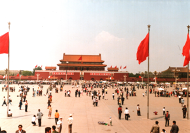
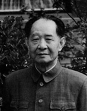
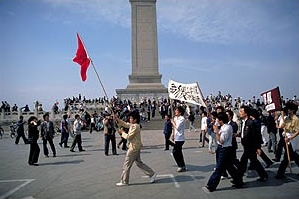
Hundreds of thousands of Chinese citizens filled Tiananmen Square in April 1989, creating the largest pro-democracy demonstration in the history of the People's Republic. What began as spontaneous mourning for Hu Yaobang, a reformist Communist Party leader who died on April 15, escalated into a sustained occupation demanding press freedom, government accountability, and an end to official corruption. By late April, the movement had spread to over 400 cities across China. Hu Yaobang had been forced to resign as General Secretary in 1987 after hardliners blamed him for student protests. His death gave young Chinese a pretext to voice grievances that ran far deeper than mourning. University students organized marches and erected a tent city in the square, but the movement quickly expanded to include workers, intellectuals, and ordinary citizens frustrated by inflation, nepotism, and the gap between the Communist Party's rhetoric and its behavior. The hunger strikes that began on May 13 drew particular sympathy, as students weakened visibly on live television. The Chinese leadership fractured over how to respond. General Secretary Zhao Ziyang favored dialogue and visited the square in tears on May 19, telling students, "We came too late." Hardliners led by Premier Li Peng and backed by paramount leader Deng Xiaoping declared martial law that same week. The internal power struggle ended with Zhao's purge and a decision to clear the square by force. On the night of June 3-4, People's Liberation Army units advanced into Beijing, firing on civilians along the main boulevards. The death toll remains unknown and fiercely contested, with estimates ranging from several hundred to several thousand. The crackdown crushed the democracy movement, ended political reform within the Party for a generation, and became the defining trauma of modern Chinese political life, one that the government has spent three decades trying to erase from public memory.
April 21, 1989
37 years ago
Key Figures & Places




What Else Happened on April 21

Rome did not rise in a day, but according to Roman tradition, it was founded on one. On April 21, 753 BC, Romulus traced a sacred boundary around the Palatine H…
Romulus traced the boundaries of a new city on the Palatine Hill, establishing the foundation of Rome according to legend. This act transformed a collection of …
Aulus Hirtius died holding his sword, not as a general, but as a consul who thought he'd won. Mark Antony slipped away from Mutina in 43 BC while his own legion…
A copper plate in Manila Bay didn't just record debt; it erased a man's entire family line from bondage. Jayadewa, the Commander-in-Chief of Tondo, waved a roya…
The Laguna Copperplate Inscription, the oldest known written document found in the Philippines, recorded the pardon of debts owed by the Honourable Namwaran and…
Pope Urban II elevated the Diocese of Pisa to a metropolitan archdiocese, granting it authority over the sees of Corsica and Sardinia. This promotion transforme…
Talk to History
Have a conversation with historical figures who witnessed this era. Ask questions, explore perspectives, and bring history to life.