Romulus Founds Rome: 753 BC Birth of an Empire
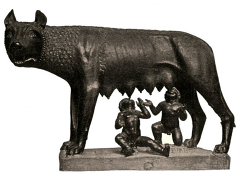
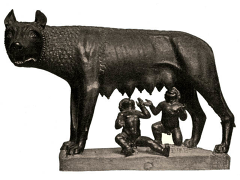
Rome did not rise in a day, but according to Roman tradition, it was founded on one. On April 21, 753 BC, Romulus traced a sacred boundary around the Palatine Hill with a bronze plow, marking the pomerium of what would become the most powerful city in the ancient world. The date, calculated centuries later by the scholar Marcus Terentius Varro, became Rome's official birthday, celebrated annually as the festival of Parilia. The founding myth itself is steeped in fratricidal violence. Romulus and his twin brother Remus, allegedly suckled by a she-wolf after being abandoned on the Tiber, quarreled over the location of their new city. When Remus mocked the low walls his brother had built by leaping over them, Romulus killed him. Whether this story preserves a kernel of historical truth or simply reflects Roman attitudes toward sovereignty and boundaries, it set the tone for a civilization built on ruthless pragmatism. Archaeological evidence confirms that settlements existed on the Palatine Hill as early as the 10th century BC, roughly aligning with the traditional timeline. Iron Age huts, pottery, and burial sites discovered there suggest that Rome's founding was less a single dramatic act than a gradual coalescence of Latin and Sabine villages into one community. The drainage of the marshy valley that became the Roman Forum, sometime in the 7th century BC, was likely the real turning point that transformed scattered hilltop settlements into a functioning city. From those modest origins on seven hills above a flood-prone river, Rome would build an empire stretching from Britain to Mesopotamia, impose a legal and administrative framework that still underpins Western governance, and leave a cultural footprint so deep that we still measure our calendar, architecture, and political vocabulary against Roman originals. Every April 21, Romans gathered to honor that mythic plowline, a reminder that even the greatest empires begin with a line drawn in the dirt.
April 21, 753 BC
Key Figures & Places
What Else Happened on April 21
Romulus traced the boundaries of a new city on the Palatine Hill, establishing the foundation of Rome according to legend. This act transformed a collection of …
Aulus Hirtius died holding his sword, not as a general, but as a consul who thought he'd won. Mark Antony slipped away from Mutina in 43 BC while his own legion…
A copper plate in Manila Bay didn't just record debt; it erased a man's entire family line from bondage. Jayadewa, the Commander-in-Chief of Tondo, waved a roya…
The Laguna Copperplate Inscription, the oldest known written document found in the Philippines, recorded the pardon of debts owed by the Honourable Namwaran and…
Pope Urban II elevated the Diocese of Pisa to a metropolitan archdiocese, granting it authority over the sees of Corsica and Sardinia. This promotion transforme…
A baker named Diogo Pires sparked the fire, shouting that priests were being mocked during Easter week. But the crowd didn't stop at rumors; they dragged hundre…
Talk to History
Have a conversation with historical figures who witnessed this era. Ask questions, explore perspectives, and bring history to life.