

Thieu Flees Saigon: South Vietnam Collapses
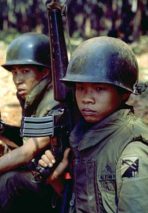
South Vietnam's president delivered a bitter, rambling resignation on live television, denouncing the United States as a faithless ally before fleeing the country. On April 21, 1975, Nguyen Van Thieu stepped down after a decade in power, blaming Washington for abandoning South Vietnam by cutting military aid while North Vietnamese forces closed in from every direction. "The United States has not respected its promises," Thieu declared. "It is inhumane. It is not trustworthy. It is irresponsible." Thieu's departure was the political collapse that preceded the military one. North Vietnamese troops had been advancing since March, sweeping through the Central Highlands and capturing Da Nang, South Vietnam's second-largest city, on March 29. The South Vietnamese army, demoralized and undersupplied, disintegrated in a series of panicked retreats that produced some of the war's most harrowing refugee crises. Columns of civilians and soldiers fled south along Highway 1, strafed by their own side's abandoned equipment now in communist hands. Thieu had ruled South Vietnam since 1967, initially as part of a military junta, then as an elected president in contests widely regarded as rigged. He was authoritarian, corrupt, and deeply suspicious of rivals, but he was also the figure Washington had chosen to prop up as the face of South Vietnamese governance. His relationship with the Nixon administration was transactional: Thieu accepted the Paris Peace Accords of 1973 only after Nixon secretly promised continued American military intervention if the North violated the agreement. Congress blocked that promise. Nine days after Thieu's resignation, Saigon fell to North Vietnamese tanks. Thieu himself flew first to Taiwan and eventually settled in suburban Massachusetts, where he lived quietly until his death in 2001. His televised denunciation of American betrayal remains one of the Cold War's most searing public moments, a preview of how the war would be remembered by those left behind.
April 21, 1975
51 years ago
Key Figures & Places
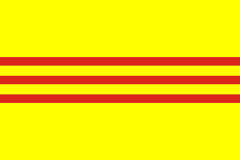
South Vietnam
Wikipedia
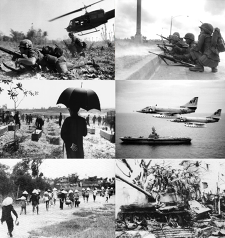
Vietnam War
Wikipedia
President
Wikipedia

North Vietnam
Wikipedia

Saigon
Wikipedia
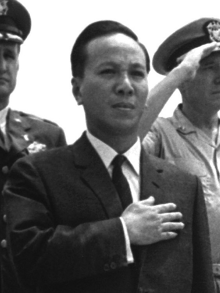
Nguyen Van Thieu
Wikipedia
Xuan Loc
Wikipedia
South Vietnamese
Wikipedia

Ho Chi Minh City
Wikipedia

Vietnam War
Wikipedia

South Vietnam
Wikipedia

Nguyễn Văn Thiệu
Wikipedia

Ho Chi Minh City
Wikipedia

Xuân Lộc district
Wikipedia

Democratic Republic of Vietnam
Wikipedia
Battle of Xuân Lộc
Wikipedia

Trần Văn Hương
Wikipedia
What Else Happened on April 21

Rome did not rise in a day, but according to Roman tradition, it was founded on one. On April 21, 753 BC, Romulus traced a sacred boundary around the Palatine H…
Romulus traced the boundaries of a new city on the Palatine Hill, establishing the foundation of Rome according to legend. This act transformed a collection of …
Aulus Hirtius died holding his sword, not as a general, but as a consul who thought he'd won. Mark Antony slipped away from Mutina in 43 BC while his own legion…
A copper plate in Manila Bay didn't just record debt; it erased a man's entire family line from bondage. Jayadewa, the Commander-in-Chief of Tondo, waved a roya…
The Laguna Copperplate Inscription, the oldest known written document found in the Philippines, recorded the pardon of debts owed by the Honourable Namwaran and…
Pope Urban II elevated the Diocese of Pisa to a metropolitan archdiocese, granting it authority over the sees of Corsica and Sardinia. This promotion transforme…
Talk to History
Have a conversation with historical figures who witnessed this era. Ask questions, explore perspectives, and bring history to life.