

Boleslaw Crowned First King of Poland
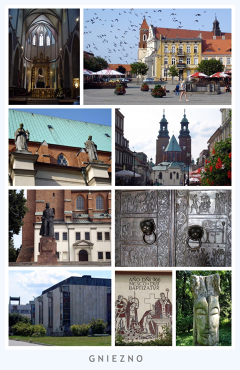
A crown forged from stolen relics sat heavy on Bolesław's head in Gniezno, not just for him, but for his dead father. The Church had denied him a royal title for years, yet here he stood, crowned by the very bishops who'd once blocked his path. This wasn't just a ceremony; it was a desperate gamble to bind a fractured land into one nation before enemies tore it apart. He died three months later, leaving behind a kingdom that outlived him by centuries. Now, when you see Poland's flag, remember: that unity started with a crown and a man who knew he might die before his work was done.
April 18, 1025
1001 years ago
Key Figures & Places

What Else Happened on April 18
Yazid I. wird nach dem Tod seines Vaters Muʿāwiya I. zweiter Kalif der Umayyaden. In weiten Teilen des Reiches wird er jedoch aus Opposition gegen die Erblichke…
Corbridge blood ran red before dawn in 796. King Æthelred I didn't die in battle; he was hacked down by his own ealdormen, Ealdred and Wada. The human cost? Pur…
en Gniezno (Polonia) Boleslao I es coronado rey.
comienzan las Cortes del Reino de León, las primeras de la historia en dar voz y voto a los tres estamentos de ese momento; el clero, la nobleza y el pueblo lla…
Die Berner können kampflos in Zofingen einziehen, was die Stellung der Habsburger gegenüber den Eidgenossen schwächt und den Grundstein für den Berner Aargau bi…
Friedrich VI., bislang Burggraf von Nürnberg, erhält das Kurfürstentum Brandenburg als erbliches Lehen und wird Kurfürst des Heiligen Römischen Reichs. Als Mark…
Talk to History
Have a conversation with historical figures who witnessed this era. Ask questions, explore perspectives, and bring history to life.