Hofmann Discovers LSD: Consciousness Unlocked
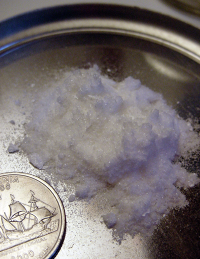
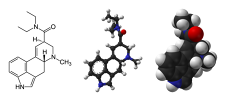
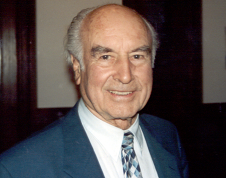
Swiss chemist Albert Hofmann accidentally absorbed a tiny quantity of lysergic acid diethylamide through his fingertips on April 16, 1943, and experienced what he described as "an uninterrupted stream of fantastic pictures, extraordinary shapes with intense, kaleidoscopic play of colors." He had first synthesized the compound, designated LSD-25, five years earlier at Sandoz Laboratories in Basel while researching ergot alkaloids for potential pharmaceutical use. Finding no obvious applications, he had shelved it until a peculiar intuition drew him back to the substance. Three days later, on April 19, Hofmann deliberately ingested 250 micrograms, a dose he considered small but which turned out to be roughly five times the threshold for psychoactive effects. He began to feel anxious and disoriented, asked his laboratory assistant to escort him home by bicycle, and spent the ride experiencing the world dissolving into shifting geometries. This date became known as "Bicycle Day" in psychedelic culture. At home, Hofmann alternated between terror and wonder as objects in his room transformed and his sense of self dissolved. Sandoz initially marketed LSD as Delysid, promoting it to psychiatrists as a tool for understanding psychotic states and treating conditions ranging from alcoholism to anxiety. Through the 1950s, thousands of patients received LSD-assisted psychotherapy, with researchers reporting promising results. The CIA simultaneously investigated the drug as a potential mind-control weapon under the MKUltra program, secretly dosing unwitting subjects in experiments that would later become a major government scandal. Timothy Leary's evangelism brought LSD out of the laboratory and into the counterculture of the 1960s, transforming it from a research chemical into a symbol of generational rebellion. Governments responded with criminalization. The United States banned LSD in 1968, and most countries followed. Research effectively ceased for decades. In the twenty-first century, clinical trials at Johns Hopkins, Imperial College London, and other institutions have renewed investigation into psychedelic-assisted therapy for depression, PTSD, and end-of-life anxiety, vindicating aspects of the research that Hofmann's accidental discovery had first inspired.
April 16, 1943
83 years ago
Key Figures & Places
What Else Happened on April 16
Thutmose III didn't march through the narrow pass; he marched right past the enemy's flank, catching the Canaanite coalition completely off guard. Over a thousa…
Pharaoh Thutmose III squeezed through a narrow pass called Megiddo, risking his army to outflank a coalition of Canaanite kings. He didn't just win; he stripped…
Otho killed himself just three months after taking the throne. His troops had lost at Bedriacum to Vitellius, and the emperor decided a quick death was better t…
Nine hundred and sixty Jewish men, women, and children chose death over surrender atop the desert fortress of Masada in April 73 AD, ending a three-year siege b…
In 682, a man named Leo got voted in while sitting on a chair that wasn't even holy yet. He'd wait six weeks for his actual consecration, staring at empty stone…
Robert Guiscard captured the port of Bari, extinguishing five centuries of Byzantine authority in Southern Italy. This collapse forced the Eastern Roman Empire …
Talk to History
Have a conversation with historical figures who witnessed this era. Ask questions, explore perspectives, and bring history to life.