Luther Faces the Emperor: Diet of Worms Begins
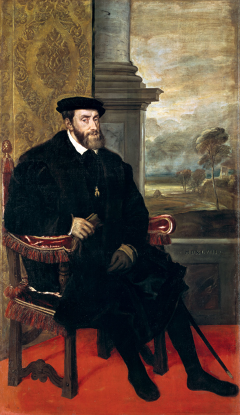
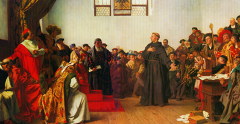
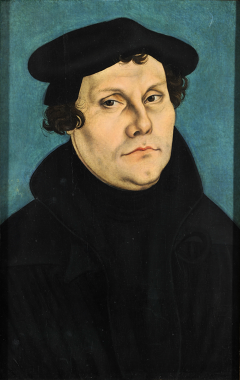
Martin Luther entered the Diet of Worms on April 16, 1521, summoned before Emperor Charles V and the assembled princes of the Holy Roman Empire to answer for his writings. The 37-year-old Augustinian monk from the backwater town of Wittenberg stood in a hall crowded with the most powerful secular and ecclesiastical rulers in Europe. Johann von Eck, the official interrogator, pointed to a pile of books on a table and asked two questions: were these his writings, and would he recant their contents? Luther confirmed the books were his but asked for time to consider his response, a request that surprised those who expected either immediate defiance or capitulation. Charles V, just twenty-one years old and ruling an empire that stretched from Spain to Austria, granted one day. The emperor regarded Luther as a minor nuisance. The papal nuncio, Girolamo Aleander, wanted Luther condemned without a hearing. The German princes, many of them resentful of both papal taxation and imperial overreach, were more sympathetic. Luther's writings had struck a nerve far beyond theology. His 1517 Ninety-Five Theses had challenged the sale of indulgences, but subsequent works attacked papal authority, questioned the sacramental system, and argued that salvation came through faith alone. The printing press had spread his ideas across Germany with a speed that Church authorities could not control. By the time Luther arrived at Worms, he was the most famous man in Germany, protected by Elector Frederick of Saxony and cheered by crowds along his route. The following day, April 17, Luther delivered his answer. The delay at Worms on April 16 gave the Reformation its most dramatic moment: a single monk standing before the combined power of Church and Empire, about to refuse the demand that he submit. The political consequences of that confrontation reshaped Europe for centuries, splitting Western Christianity, igniting wars of religion, and establishing the principle that individual conscience could stand against institutional authority.
April 16, 1521
505 years ago
Key Figures & Places
What Else Happened on April 16
Thutmose III didn't march through the narrow pass; he marched right past the enemy's flank, catching the Canaanite coalition completely off guard. Over a thousa…
Pharaoh Thutmose III squeezed through a narrow pass called Megiddo, risking his army to outflank a coalition of Canaanite kings. He didn't just win; he stripped…
Otho killed himself just three months after taking the throne. His troops had lost at Bedriacum to Vitellius, and the emperor decided a quick death was better t…
Nine hundred and sixty Jewish men, women, and children chose death over surrender atop the desert fortress of Masada in April 73 AD, ending a three-year siege b…
In 682, a man named Leo got voted in while sitting on a chair that wasn't even holy yet. He'd wait six weeks for his actual consecration, staring at empty stone…
Robert Guiscard captured the port of Bari, extinguishing five centuries of Byzantine authority in Southern Italy. This collapse forced the Eastern Roman Empire …
Talk to History
Have a conversation with historical figures who witnessed this era. Ask questions, explore perspectives, and bring history to life.