Lincoln Falls: A President Dies at Ford's Theatre
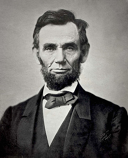
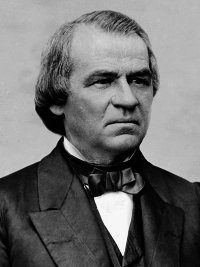
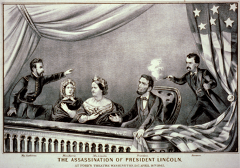
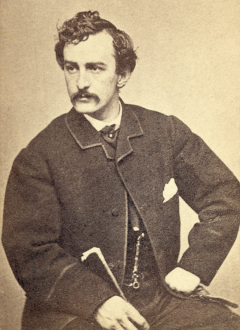
Abraham Lincoln died at 7:22 AM on April 15, 1865, in a narrow bed in the back room of William Petersen's boarding house across the street from Ford's Theatre. He had been unconscious since John Wilkes Booth's bullet entered his skull nine hours earlier. Secretary of War Edwin Stanton, who had directed the manhunt for Booth from the same house through the night, reportedly declared, "Now he belongs to the ages." Lincoln was 56 years old and had been president for four years and 42 days. The death sent the nation into mourning on a scale unprecedented in American history. Within hours, buildings in Washington, New York, and Philadelphia were draped in black crepe. Church bells tolled continuously. Vice President Andrew Johnson was sworn in as president at the Kirkwood House hotel at 10:00 AM, with Chief Justice Salmon Chase administering the oath. Johnson, a Tennessee War Democrat whom Lincoln had chosen as a unity ticket running mate, now inherited the staggering task of Reconstruction without Lincoln's political skill or moral authority. Lincoln's funeral procession through Washington on April 19 drew tens of thousands of mourners. His body was then placed aboard a special nine-car funeral train that retraced, in reverse, the route Lincoln had traveled from Springfield to Washington in 1861. Over thirteen days, the train stopped in twelve cities, where an estimated one million Americans viewed his open casket and seven million more lined the railroad tracks. It was the largest public mourning event in American history to that date. The assassination transformed Lincoln's legacy overnight. A president who had been bitterly opposed by Copperhead Democrats, criticized by Radical Republicans, and caricatured in newspapers as an uncouth backwoodsman became a national saint. His death on Good Friday encouraged comparisons to Christ. The martyr's crown made it almost impossible to challenge the mythology that quickly grew around him, binding Lincoln's name permanently to the causes of Union and emancipation in ways that even his most loyal supporters had not fully embraced during his lifetime.
April 15, 1865
161 years ago
Key Figures & Places
What Else Happened on April 15
Pope Stephen III convened the Lateran Council to formally reject the iconoclastic decrees issued by the Council of Hieria fifteen years earlier. By anathematizi…
Robert Guiscard captured Bari, ending five centuries of Byzantine rule in southern Italy. This surrender forced the Eastern Roman Empire to retreat entirely fro…
A river of blood ran red at the Terek as Timur's vultures circled Sarai's ashes. The Golden Horde's capital didn't just fall; it vanished under fire, leaving on…
French cavalry and cannon shattered the English army at Formigny on April 15, 1450, killing or capturing nearly the entire 4,000-man force and shattering Englan…
Swedish infantry didn't just fight; they marched in perfect lockstep while musketeers fired volleys that turned the mud red. Gustavus Adolphus led them at Lütze…
Thousands of starving peasants and hidden Christians held out for months inside Hara Castle. When the Tokugawa forces finally stormed the walls, they didn't jus…
Talk to History
Have a conversation with historical figures who witnessed this era. Ask questions, explore perspectives, and bring history to life.