

English Army Crushed at Formigny: Hundred Years' War Nears Its End
French cavalry and cannon shattered the English army at Formigny on April 15, 1450, killing or capturing nearly the entire 4,000-man force and shattering England's century-long grip on Normandy. The battle marked the first major engagement where gunpowder artillery decisively defeated the English longbow formations that had dominated European warfare since Crecy in 1346. Two small French culverins, positioned beyond bowshot, raked the English lines with fire the archers could not answer. The English commander, Sir Thomas Kyriel, had landed at Cherbourg with 3,000 men and picked up reinforcements while marching toward Bayeux. His longbowmen had won every major battle of the Hundred Years' War, from Crecy to Poitiers to Agincourt, by planting stakes and destroying French cavalry charges with volleys of arrows. At Formigny, Kyriel deployed this proven formation along a stream, confident that French knights would break themselves against it as they always had. The French commander, the Comte de Clermont, refused to cooperate. Instead of charging, he brought up two small cannon and bombarded the English positions from a distance the longbows could not reach. The English broke formation to charge the guns, sacrificing their defensive advantage. At that moment, a second French force under Arthur de Richemont, the Constable of France, arrived from the south and struck the English flank. Caught between two armies in open ground, the English formation collapsed. Formigny effectively ended English control of northern France. Normandy, held by England since Henry V's conquest in 1417-1419, fell within months as French forces swept through one garrison town after another. By August 1450, Cherbourg, the last English stronghold in Normandy, surrendered. Only Calais and a strip of Gascony remained of England's once-vast French territories. The Hundred Years' War, which had begun in 1337, would formally end in 1453 with the English expulsion from Bordeaux, but Formigny was the battle that made that conclusion inevitable.
April 15, 1450
576 years ago
Key Figures & Places

France
Wikipedia
England
Wikipedia
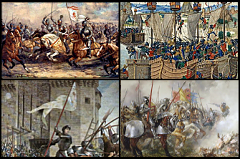
Hundred Years' War
Wikipedia
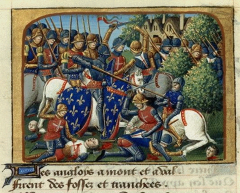
Battle of Formigny
Wikipedia

Battle of Formigny
Wikipedia

Hundred Years' War
Wikipedia

France
Wikipedia
England
Wikipedia

Hillsborough disaster
Wikipedia

Hillsborough Stadium
Wikipedia

Sheffield Wednesday F.C.
Wikipedia

ناثانيل مينديز لاينغ
Wikipedia

Association football
Wikipedia
Samir Said
Wikipedia

Kuwait
Wikipedia
What Else Happened on April 15
Pope Stephen III convened the Lateran Council to formally reject the iconoclastic decrees issued by the Council of Hieria fifteen years earlier. By anathematizi…
Robert Guiscard captured Bari, ending five centuries of Byzantine rule in southern Italy. This surrender forced the Eastern Roman Empire to retreat entirely fro…
A river of blood ran red at the Terek as Timur's vultures circled Sarai's ashes. The Golden Horde's capital didn't just fall; it vanished under fire, leaving on…
Swedish infantry didn't just fight; they marched in perfect lockstep while musketeers fired volleys that turned the mud red. Gustavus Adolphus led them at Lütze…
Thousands of starving peasants and hidden Christians held out for months inside Hara Castle. When the Tokugawa forces finally stormed the walls, they didn't jus…
Musketry smoke choked the narrow streets of Kilrush as thirty men in leather jerkins tried to stop an army's advance. They didn't just die; they were cut down b…
Talk to History
Have a conversation with historical figures who witnessed this era. Ask questions, explore perspectives, and bring history to life.